










New vulnerabilities, zero-days, and the patches that close them — tracked from disclosure to deadline. Every entry here is checked against the vendor advisory or the research behind it, weighed by what it actually takes to exploit, and ranked by the only question that matters: what do you patch first?
Start here
- VMware vCenter Hit Again. This 9.8 Skips the Login.
- CISA Says Patch Now. One Command Tells You If You’re Exposed.
- The Eighth Chrome Zero-Day This Year. Update Now.

VMware vCenter Hit Again. This 9.8 Skips the Login.
Broadcom has patched 23 security vulnerabilities across its VMware lineup, and the headline flaw is one no vCenter administrator can afford to sit on. It is a critical authentication bypass, scored 9.8 out of 10, in the service that decides who is allowed into vCenter at all. An attacker who can reach it over the…

N-able MailAssure Hit the Exploited List. Patch by November 26.
On Monday, CISA put N-able MailAssure on its list of flaws attackers are already exploiting — and gave federal agencies three days to deal with it. The flaw, CVE-2026-134624, is a server-side request forgery bug in the email filtering platform’s LDAP synchronization check, and it was found while N-able was investigating a break-in on its…

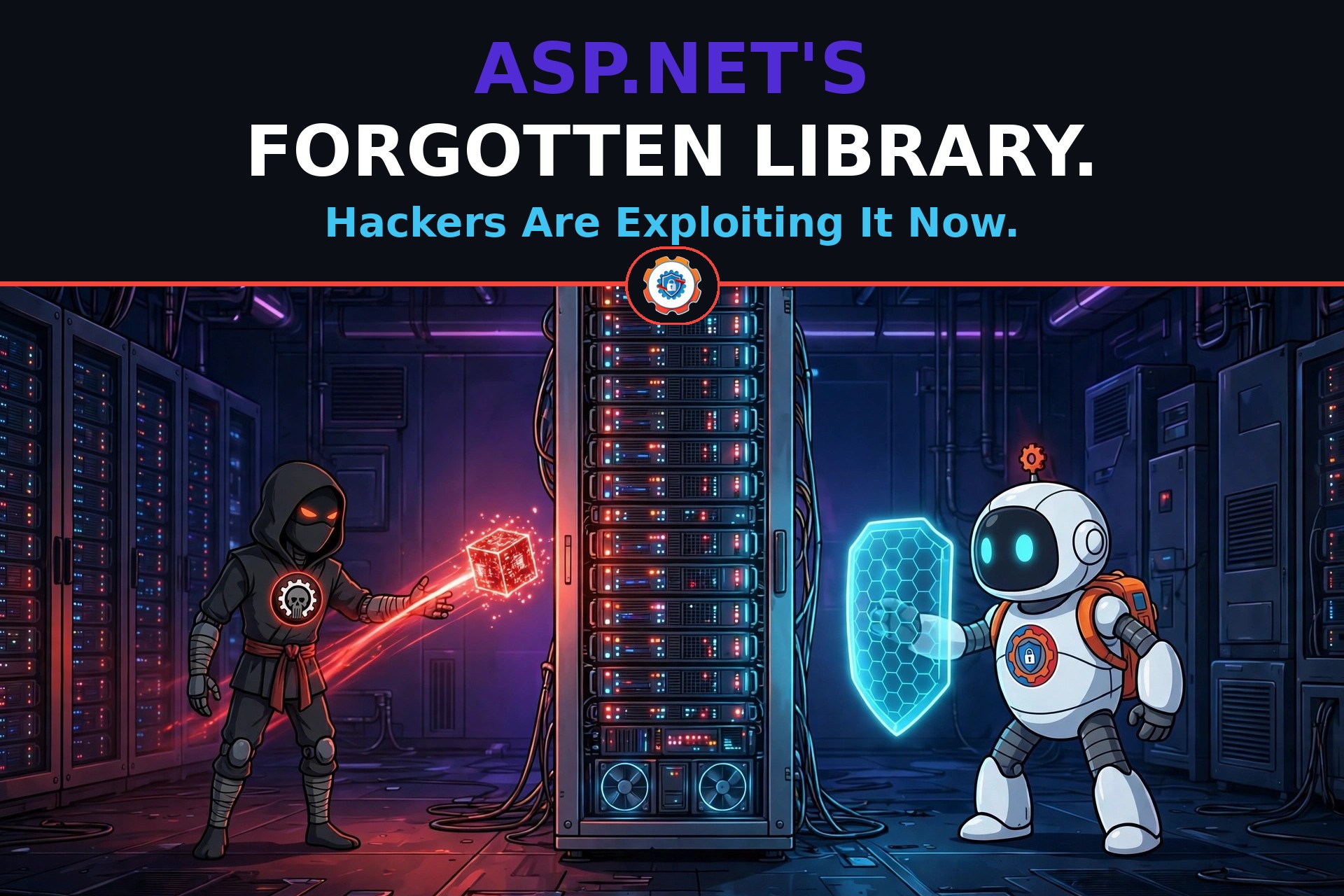
ASP.NET’s Forgotten Library. Hackers Are Exploiting It Now.
What happened Some software dies quietly. The project page goes stale, the maintainer moves on, and the code keeps running — inside companies that never noticed. That is the story of Idunno.AntiCsrf, a small open-source library that protected ASP.NET WebForms apps against cross-site request forgery. It has not been updated since December 2008. Now researchers…

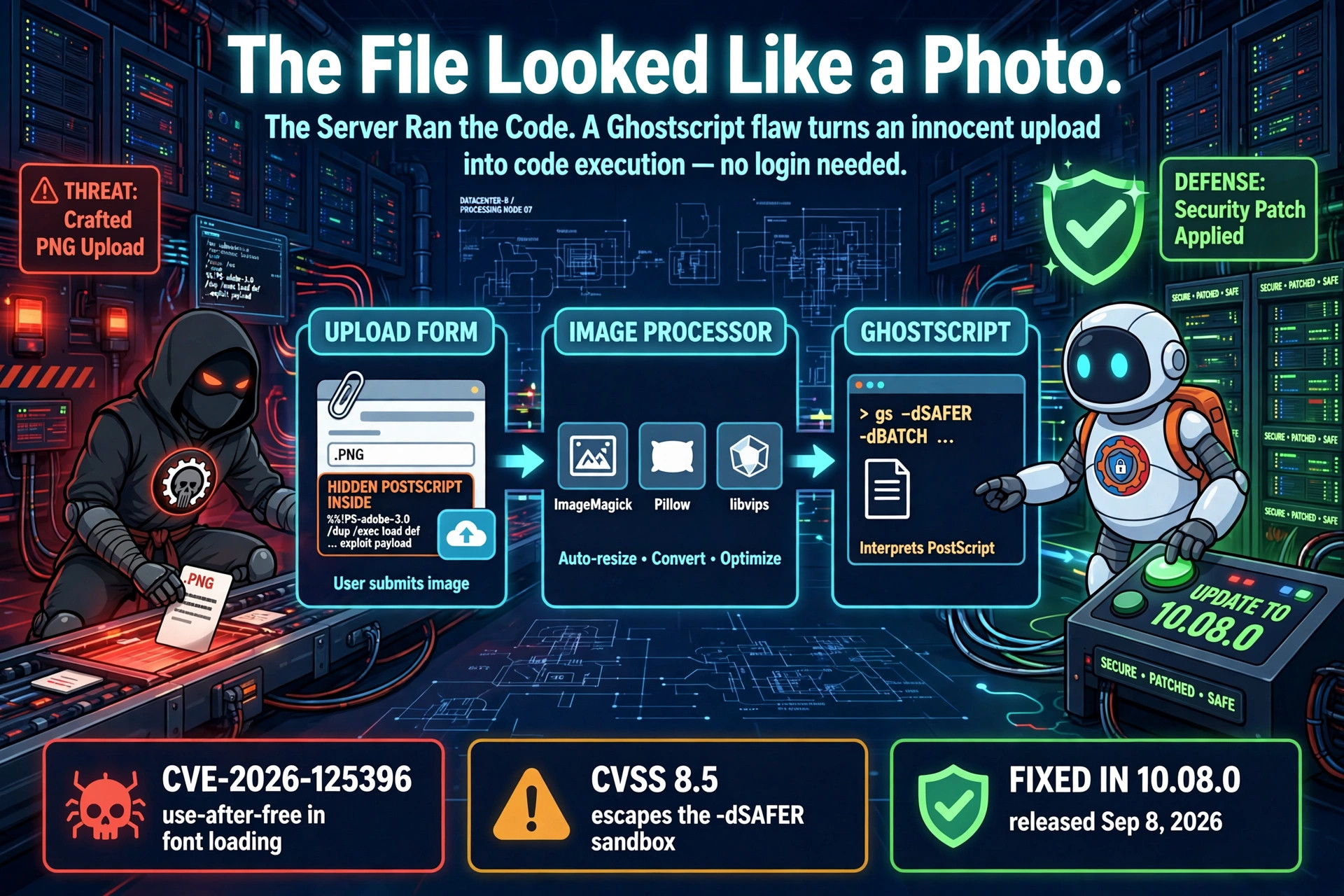
The File Looked Like a Photo. The Server Ran the Code.
A file arrives looking like a photo — named .png, maybe .jpg — and nothing about it looks dangerous. A server opens it to make a thumbnail — and instead of a picture, it runs the attacker’s code. That is CVE-2026-125396, a Ghostscript flaw demonstrated by security firm pwn.ai — a reminder that the most…

One Long Key Name. Your Mail Client Hands Over the Data.
Your mail client does not have a bug. The encryption library underneath it does — and that is worse. On November 20, 2026, the GnuPG project warned that a single malicious OpenPGP key can trigger a critical memory flaw in GPGME, the standard library programs use to work with GnuPG. The trigger is almost absurdly…

Four Flaws. One Deadline. Patch by November 23.
On Friday, November 20, CISA added four flaws to its Known Exploited Vulnerabilities catalog — the list for weaknesses attackers are already using. Federal agencies have until Monday, November 23, to patch all four, under Binding Operational Directive 26-04. Three days from listing to deadline. Three of the four names will look familiar: we covered…

The Form Field Was the Exploit.
Nobody typed a payload. Nobody logged in. A visitor filled in a form field, hit submit, and the web framework itself did the dangerous work before a single line of the application’s own code ran. That is Ruby2Shell — the headline flaw in a Ruby release patching seven memory-safety bugs, five with working remote-code-execution exploits.…

Seven Critical Flaws. All of Them 9.2.
Seven critical flaws. Every one of them scores 9.2. The PHP Foundation shipped emergency security updates on November 19 for all supported PHP versions, and the headline flaw — codenamed “phpAfterShell” — turns an interrupted file write into remote code execution on the server. If your site runs PHP, this update is not optional. The…

The Guest Read the Host. All 127 Gigabytes.
A virtual machine is supposed to be a box. Whatever runs inside it stays inside it — that is the whole promise of the cloud. This week, researchers showed that promise breaking on AMD hosts: from inside a virtual machine of their own on DigitalOcean, they read about 127 gigabytes of the host server’s memory.…

Two Months In. The Patch Just Landed.
Broadcom patched a critical VMware vCenter flaw on Thursday — and the attackers were already inside. The flaw, CVE-2026-123890, scores 9.8 out of 10 and lets anyone with network access to vCenter bypass authentication and walk away with an administrator session. No workaround exists. Broadcom’s FAQ calls the fix an “emergency change” and urges customers…

Six Flaws. No Login. No Workaround.
F5 has a bad-news day, and it comes in a bundle. The company disclosed six critical flaws in its BIG-IP traffic platform on November 18, every one rated 9.8 out of 10. Each is a stack-based buffer overflow in the data plane, the box’s traffic-moving part. An attacker needs no login, no account, no password.…

A Decade in the Code. No Login Required.
Ten years. That is how long a flaw sat in the HTTP/2 code of NGINX, one of the most widely used web servers on the internet, waiting for someone to send the right request. On November 18, F5 — the company behind NGINX — shipped the fix. The flaw, tracked as CVE-2026-123007 and dubbed “nginx2root,”…

CISA Says Patch Now. One Command Tells You If You’re Exposed.
Yesterday the story was the confirmation and the fix. Today the federal government weighed in — and the vendor whose product sits on the front line told everyone exactly how to check whether they are exposed. CISA has urged organizations to patch Java4Shell immediately. The flaw, CVE-2026-114938, is a memory-corruption bug in the fast Base64…

The Rumor Was Real. The Fix Is Out.
Yesterday it was a rumor: a reported 9.2 flaw in Java, no confirmation, no patch. Today the story arrived — and it is real. Calif has published its write-up, and Oracle and the OpenJDK project have released the fix. Java4Shell, tracked as CVE-2026-114938, lets an attacker with no account run their own code on Jira,…

Eleven Flaws Patched Today. The 9.2 Is Still a Rumor.
Oracle is releasing security patches for Java today, Tuesday, November 17, 2026. Eleven vulnerabilities in Java SE, all of them exploitable remotely, and none of them requiring an attacker to log in first. That combination is what makes this patch worth your attention even before the details arrive. Oracle has confirmed the count, the timing,…

Eleven Years Hiding. One Packet Crashes the Server.
Some bugs hide for a few weeks. This one hid for eleven years — inside the networking code of nearly every Linux server on the internet. All it takes to wake it up is a stream of crafted packets. No login. No password. The server just falls over. Researcher Hyunwoo Kim disclosed the flaw, dubbed…

One Label Wasn’t Escaped. The Server Obeyed Anyway.
CISA added a new flaw to its exploited-vulnerabilities list on Friday, and the timeline should make every IRC server operator wince: the fix shipped on November 7, exploitation attempts began the next day, and the listing landed on November 13 with a federal patch deadline of November 16. The flaw is CVE-2026-114713, an 8.6-rated command…

182 Holes Patched. Five Were Critical.
Your browser is the most attacked program on your computer — and this week, both of the big ones needed a lot of stitches. Google and Mozilla have released updates that close more than 180 security flaws between them: 83 in Chrome, 99 in Firefox, and another 103 fixes in Mozilla’s Thunderbird mail client. Five…

One Planted Key. Every Private Image Was Open.
A container registry is where a company keeps the images every server, laptop and cloud workload is built from. Red Hat Quay is one of the registries enterprises trust with exactly that — and this week Red Hat disclosed two critical flaws that, together, let an attacker read and overwrite private images across an entire…

The Socket Was Open. Root Was Free.
Check Point’s firewalls are supposed to be the thing standing between attackers and the network. This week the company admitted that, since late October, hackers have been using a flaw in its own products to gain root access on the devices themselves — and it has rushed out emergency hotfixes to stop them. The exploitation…

The Firewall Let Them In. Then Came the Wiper.
Your firewall is supposed to be the thing attackers bounce off. For the past two weeks, it has been the way in. Check Point says an unknown attacker has been breaking into unpatched Check Point Security Gateways through the PHP2Shell flaws, climbing to root with a second vulnerability, planting a backdoor built specifically for Check…

The Fix Was the Flaw.
In October 2025, Microsoft shipped a fix for a dangerous class of attacks against Windows’ Common Log File System — and the attacks dropped sharply. Then a security researcher looked at the fix itself, and found the mitigation could be turned into a weapon. The new flaw, called SignDrop, hands an attacker full SYSTEM privileges…

The Clone Looked Safe. The Code Ran Anyway.
Cloning a repository is routine: paste a URL, Git downloads the code, and you start working. It feels safe — you are only reading files, after all. A flaw fixed this week in Git breaks that assumption: a malicious repository can run the attacker’s code on your machine during a recursive clone, before you ever…

Two Pings. No Login. The Database Crashes.
MongoDB Server has a critical flaw that lets a remote attacker crash a database server with two requests and no login at all. The requests do not crash anything on their own. They plant a trap that waits — and it fires later, at the worst possible moment: during a failover, when a replica set…

No Login. A 9.8 in Apache HTTP Server.
Apache HTTP Server — the web server behind a huge share of the internet — has a critical flaw that lets a remote attacker run code on the server without logging in. The only requirement is that the server has HTTP/2 turned on. Tracked as CVE-2026-119618, it scores 9.8 out of 10, and the fix…

No Login. A 9.6 in Zoom Workplace.
Zoom has patched two security flaws in Zoom Workplace for Windows — including a critical one that lets an unauthenticated attacker escalate privileges over the network. No login. No special permissions. Just network access to a machine running the affected client. The fix is version 7.1.8, and it is out now. The critical flaw, CVE-2026-108186,…

The PoC Is Public. 73% of Downloads Are Still Exposed.
React has disclosed a critical flaw in its Server Components — and the proof-of-concept code that exploits it is already public on GitHub. The vulnerability, CVE-2026-126187, scores 9.5 out of 10 and allows an unauthenticated attacker to run code on the server. The fix is a version upgrade. The problem is that nearly three-quarters of…

No Login. The Phone System Handed Over Its Keys.
CISA added a high-severity flaw in Cisco BroadWorks to its Known Exploited Vulnerabilities catalog on Tuesday, November 10, 2026 — and gave federal agencies until November 24 to patch it. The flaw lets an attacker read sensitive files off a phone system without logging in. And the attack already happening in the wild was run…

An Empty Cookie. Full Admin Access.
A login cookie containing nothing at all — an empty pair of curly braces — is enough to walk into Xen Orchestra as an administrator. French software company Vates confirmed on November 10 that the flaw, tracked as VSA-2026-062, is already being actively exploited, and the attackers who use it can end up with full…

The Sandbox Has a Hole. Your Crypto Keys Are Inside.
Every iPhone runs on a promise: apps stay in their own sandbox, and one app cannot read another app’s files. A public escape published this week breaks that promise — and it puts crypto wallet keys, seed phrases, and login credentials within reach of any app that uses it. The escape is called worse_query. Researcher…
Something went wrong. Please refresh the page and/or try again.
Follow My Blog
Get new content delivered directly to your inbox.