
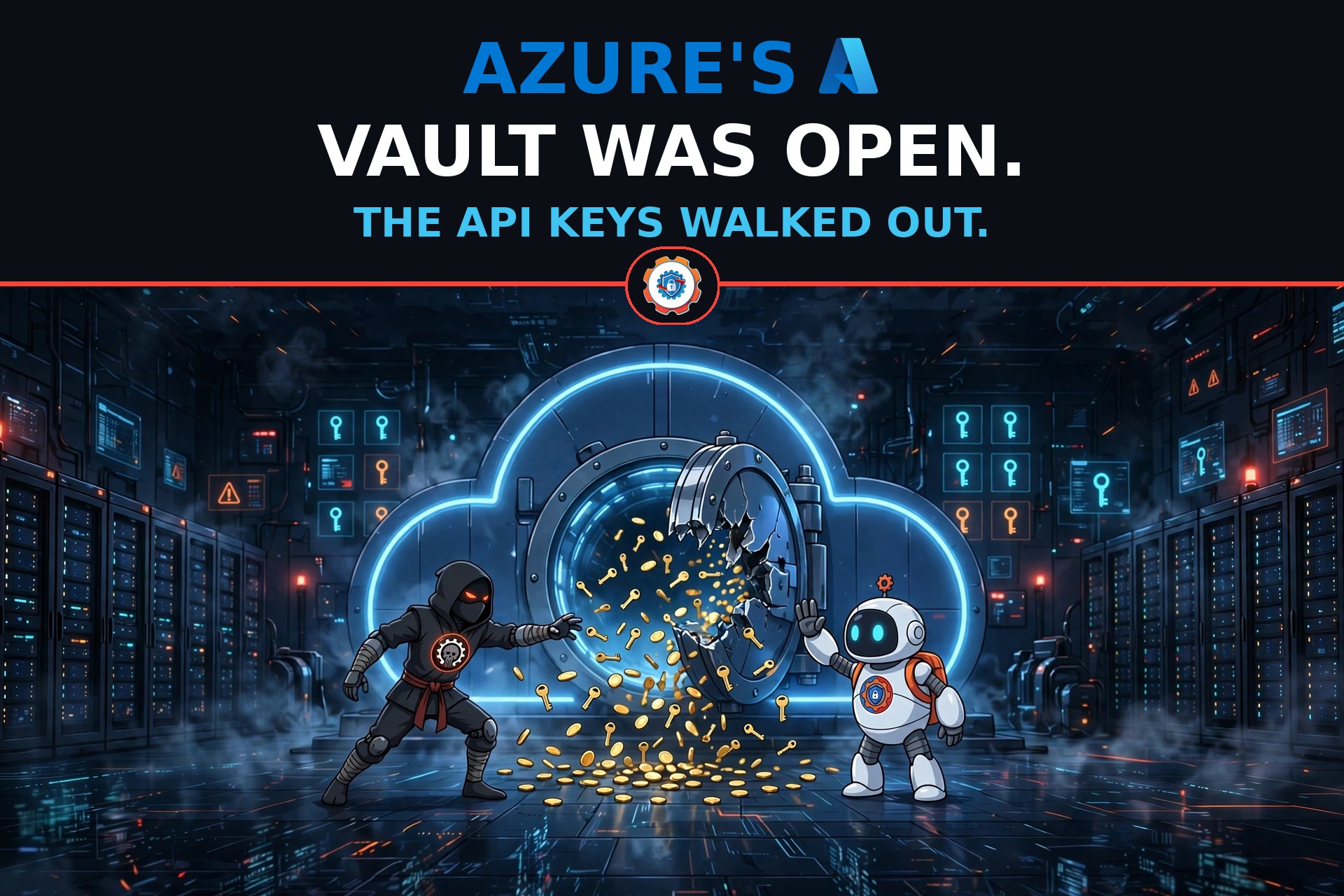











Azure’s Vault Was Open. The API Keys Walked Out.
Microsoft has warned customers that a security flaw in Azure API Management (APIM) Classic tiers was exploited to steal stored API credentials. Microsoft said in advisory MZK9-GH0 that it identified the flaw on November 18, 2026, and deployed a mitigation the following day. There is no CVE assigned to the flaw, which makes the advisory itself the reference defenders need to track.
The flaw allowed unauthorized access to certain management functions when an APIM Classic instance was not configured in line with Microsoft’s recommended security best practices. With that access, an attacker could perform admin operations on the instance — including reaching the secrets it stores. APIM v2 tiers were not impacted, so the exposure is specific to customers still running Classic.
What may have been exposed is the kind of material that turns one compromise into many. Microsoft listed secrets held in Named Values, client secrets for identity providers, client secrets for OpenID Connect providers, subscription keys, and tokens used to call direct management APIs. Depending on the permissions attached to those credentials, they could unlock additional apps, services, or backend systems far beyond the APIM instance itself.

The fix closed the door. The keys are still out there.
Microsoft closed the unauthorized access path on November 19 and rotated Microsoft-controlled keys where appropriate. But that remediation does not invalidate customer credentials that may already have been taken. A stolen API key does not stop working because the hole it came through has been patched — it keeps working until someone rotates it. That is the real remediation here, and it falls on customers, not on Microsoft.
Customers should rotate every potentially exposed credential, investigate suspicious activity in any system reachable through those credentials, and review their logs for signs of misuse. The urgency is not theoretical: this was not a flaw found by a scanner and fixed in time. It was found because it was already being exploited.
Norway found it first
The attack came to light through Norway. Norway’s National Security Authority (NSM) said an unknown actor targeted access tokens, secrets, and Named Values in APIM, and that the country’s energy sector discovered the flaw first. Organizations in other countries and sectors were affected as well.
Equinor disclosed an ongoing cyberattack on November 17 and later said it had stopped the attack, with no indication that data was stolen or altered. Skagerak Energi reported an attempted attack with no impact and no evidence of compromise. The NSM also warned that instances running below specific runtime versions remain vulnerable, and urged customers to verify their instance received the security update. It is unclear whether those runtime updates are separate from Microsoft’s initial mitigation, so a patched instance is not something to assume — it is something to check.
Unverified claims about how it worked
A Reddit administrator claimed their organization found the flaw after detecting unauthorized Key Vault access using a valid admin token, alleging a zero-day authentication bypass in a deprecated legacy API with no customer-visible logs, and that Microsoft first blamed leaked customer credentials. BleepingComputer has not independently verified these allegations, and they should be treated as unconfirmed claims, not established fact. If they were true, they would raise uncomfortable questions about visibility: an attack that leaves no logs a customer can see is an attack a customer cannot detect on their own.
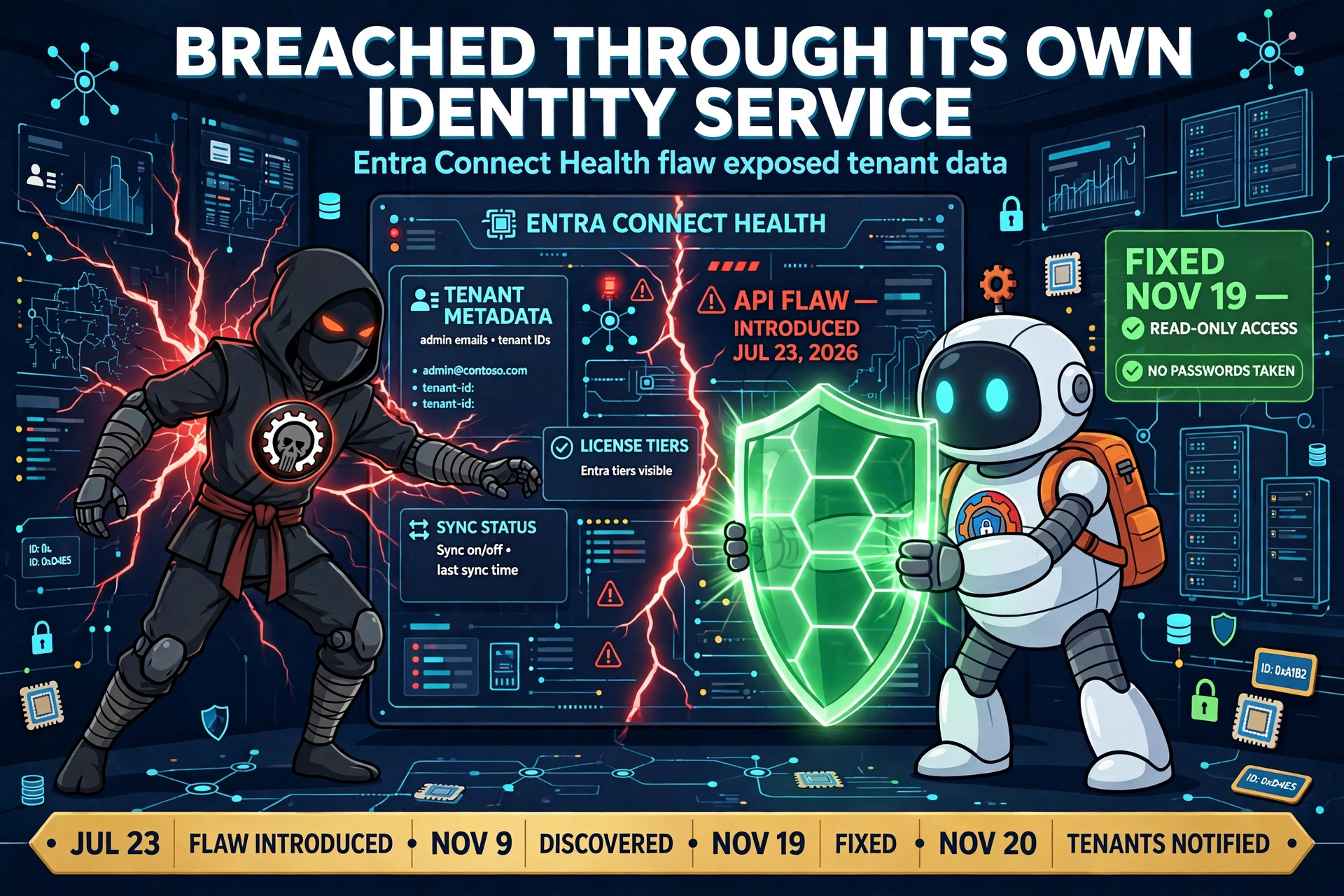
The incident also arrives days after Microsoft confirmed another breach through its own Entra Connect Health service, in which attackers stole tenant configuration information and admin email addresses. Two breaches in one week, both touching the services customers trust to guard their identities and credentials, is a pattern worth noticing even before all the details are in. And the credential-theft playbook is familiar: attackers have already turned stolen AI keys into million-dollar bills for their victims — stolen credentials are only as harmless as the access they carry.
What to do now

- Rotate every potentially exposed APIM credential now. Named Values secrets, identity and OpenID Connect client secrets, subscription keys, and management API tokens — do not wait for evidence of misuse. The fix does not do this for you.
- Hunt for misuse. Use the threat-hunting queries shared by cloud researcher Anders Kristiansen, and review APIM, Key Vault, and downstream system logs for unusual admin-token use or access from unexpected places.
- Verify your runtime version. Per the NSM’s warning, confirm your APIM instance is on a patched runtime version — do not assume the November 19 mitigation covered it.
- Treat reachable systems as potentially accessed. Any app, service, or backend those credentials could reach should be investigated as if it was touched, until the logs say otherwise.
Microsoft’s mitigation stopped the bleeding on November 19. But credentials stolen before that date are still live, still valid, and still useful to whoever holds them. The window between discovery and rotation is the attacker’s window — and for APIM Classic customers, closing it is now the job.