


The Fridges Were Saved in Secret. The Hackers Never Got In.
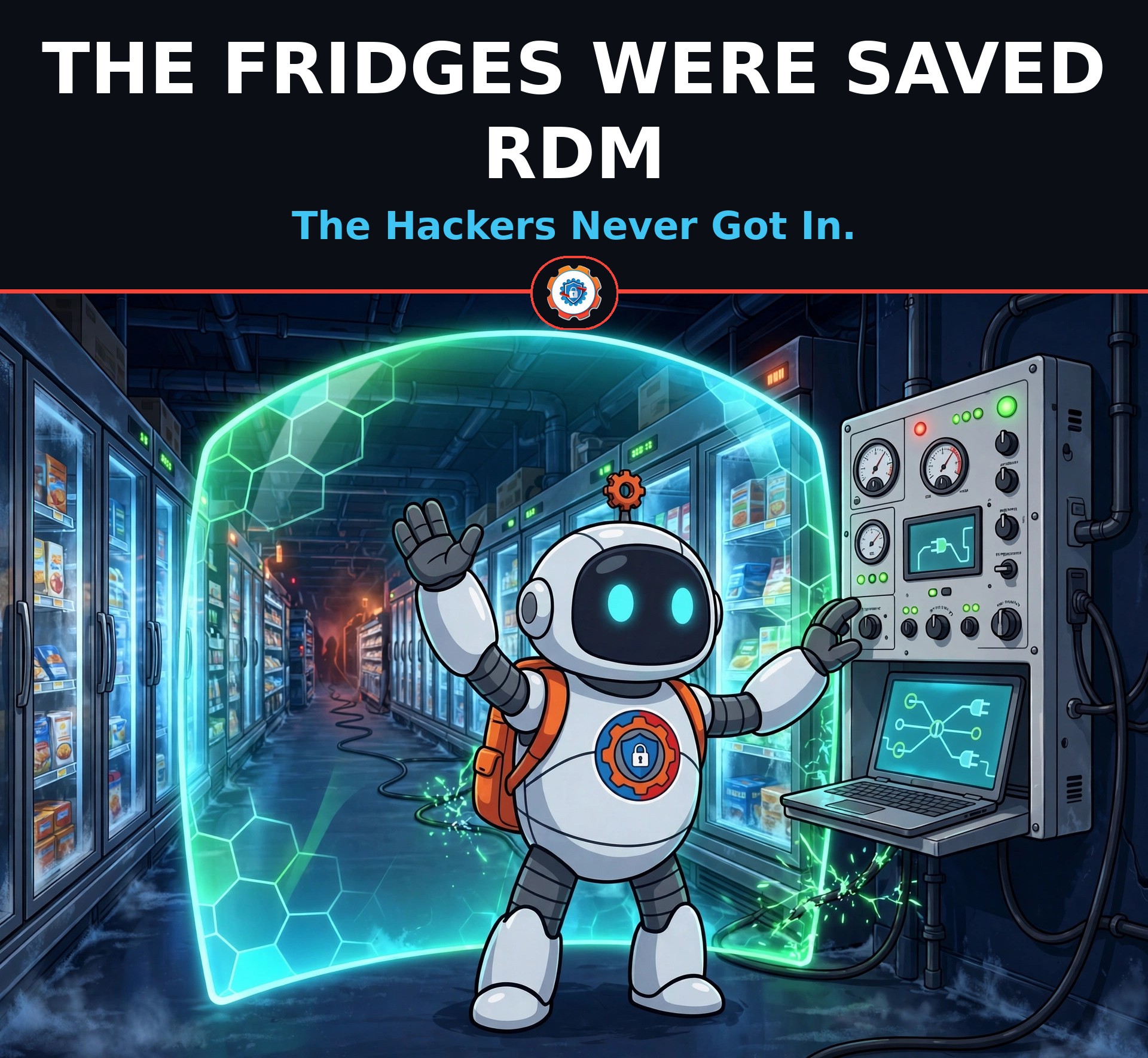
Britain quietly fought — and won — a cyber battle most people never heard about. Within days, thousands of refrigeration controllers were pulled off the open internet, protecting tens of thousands of fridges and freezers at supermarkets, stadiums, warehouses, restaurants, and gas stations. No press conference announced it. The food stayed cold, and the hackers never got in.
It started across the Channel. In mid-October, a cyberattack hit hundreds of French supermarkets, targeting web-connected refrigeration systems from Danish manufacturer Danfoss. Attackers turned temperatures up remotely and destroyed frozen food stocks. The attacks spread to Belgium, the Netherlands, Denmark, Sweden, and Finland, and a small number of French blood bank sites were also hit. We covered the first wave when the freezers were hacked and the food spoiled, and the follow-up when France named the attackers behind 700 hit stores and 15 fires.
In the UK, nobody panicked — at first. British operators do not typically use Danfoss controller software. They use controllers made by RDM, short for Resource Data Management. Different vendor, different software, different problem — or so it seemed.
The UK escaped a similar disaster by a whisker. In late October, ethical hacker Neil McCourt, who works at Omega Solutions, a firm specializing in fridge telemetry, discovered a major flaw in the UK setup. Security specialists at Pen Test Partners verified the vulnerability and raised the alarm. Had attackers found it first, the damage could have been worse than France’s.
What followed was a race against time. The NCSC did not even acknowledge Omega Solutions’ vulnerability report, Pen Test Partners says. Eventually the NCSC issued an urgent alert, after finding multiple UK supermarkets, retailers, and supply chain operators exposed. Then everyone moved at once: Pen Test Partners, Omega Solutions, the NCSC, RDM, the British Retail Consortium, the Department for Environment, Food and Rural Affairs, the Food Standards Agency, and others joined a mass effort to find exposed controllers.
Thousands of devices controlling tens of thousands of refrigeration units were taken off the open internet — some remotely, some in person. Retailer teams worked evenings and weekends. One BBC source called it “a race against time”: every exposed controller was a door an attacker could walk through.

The issue has now been largely mitigated, and RDM has released new firmware addressing the flaw. But the job is not finished. Smaller cold chain operators may still be exposed if their controllers remain online — big supermarkets moved fast, while smaller operators are harder to reach and slower to patch.
RDM pushes back on comparisons with the Danfoss units attacked in Europe, telling the BBC that hacking its fridges and freezers would have involved getting hold of a piece of hardware. “This was a vulnerability identified in a test environment,” said Ged Evans, CEO of RDM. The exact exploits are not being published — authorities refuse, because attackers could still cause harm.
The warning signs were already public. The FBI’s Cyber Division and CISA said in a joint release that they were “observing malicious cyber activity targeting industrial refrigeration and cold-chain monitoring systems around the world,” warning that unpatched or internet-accessible controllers can let attackers change settings, causing inventory loss and equipment damage. This is not a one-country or one-vendor problem — it is a whole class of equipment, the quiet machinery that keeps food cold, now in attackers’ crosshairs.
Why it matters
Cold chain systems are critical infrastructure. A supermarket freezer is not a server room, but when its controller is reachable from the internet, it is a networked device like any other, and an attacker who raises its temperature can destroy a store’s frozen stock in hours, with no break-in. France proved the damage is real; the UK proved the rescue is possible — but only because a researcher found the flaw first.
The uncomfortable part is the “by a whisker.” The UK was not saved by a better product. It was saved by a faster response — and by luck in who found the flaw. The NCSC’s slow start shows the reporting channel matters as much as the patch. A vulnerability nobody acts on is as dangerous as a vulnerability nobody finds.
What operators should check now
If you run connected cooling equipment, these four checks matter most:

- Take controllers off the open internet. No refrigeration controller should be directly reachable from the internet. Put it behind a firewall or a VPN, and confirm nothing answers on a public address.
- Apply the RDM firmware update. If your sites use RDM controllers, install the new firmware the company released for this issue, and confirm it landed on every unit — not just headquarters.
- Audit what is actually exposed. Inventory every connected controller across every site, including the ones installed years ago and forgotten. Smaller operators are the most exposed precisely because their equipment is the least tracked.
- Segment and monitor the network. Keep refrigeration controls on their own segment, away from office and point-of-sale systems, and watch for unexpected remote connections or temperature swings. An unexplained temperature swing is a security event, not just a maintenance ticket.
The fridges were saved in secret. The next time, the rescue may not be secret — or it may not come at all. The lesson: the equipment that keeps food cold is part of your attack surface now, and it deserves the same discipline as any server.