



Leaked Credentials. Your Kubernetes Secrets Were Open.
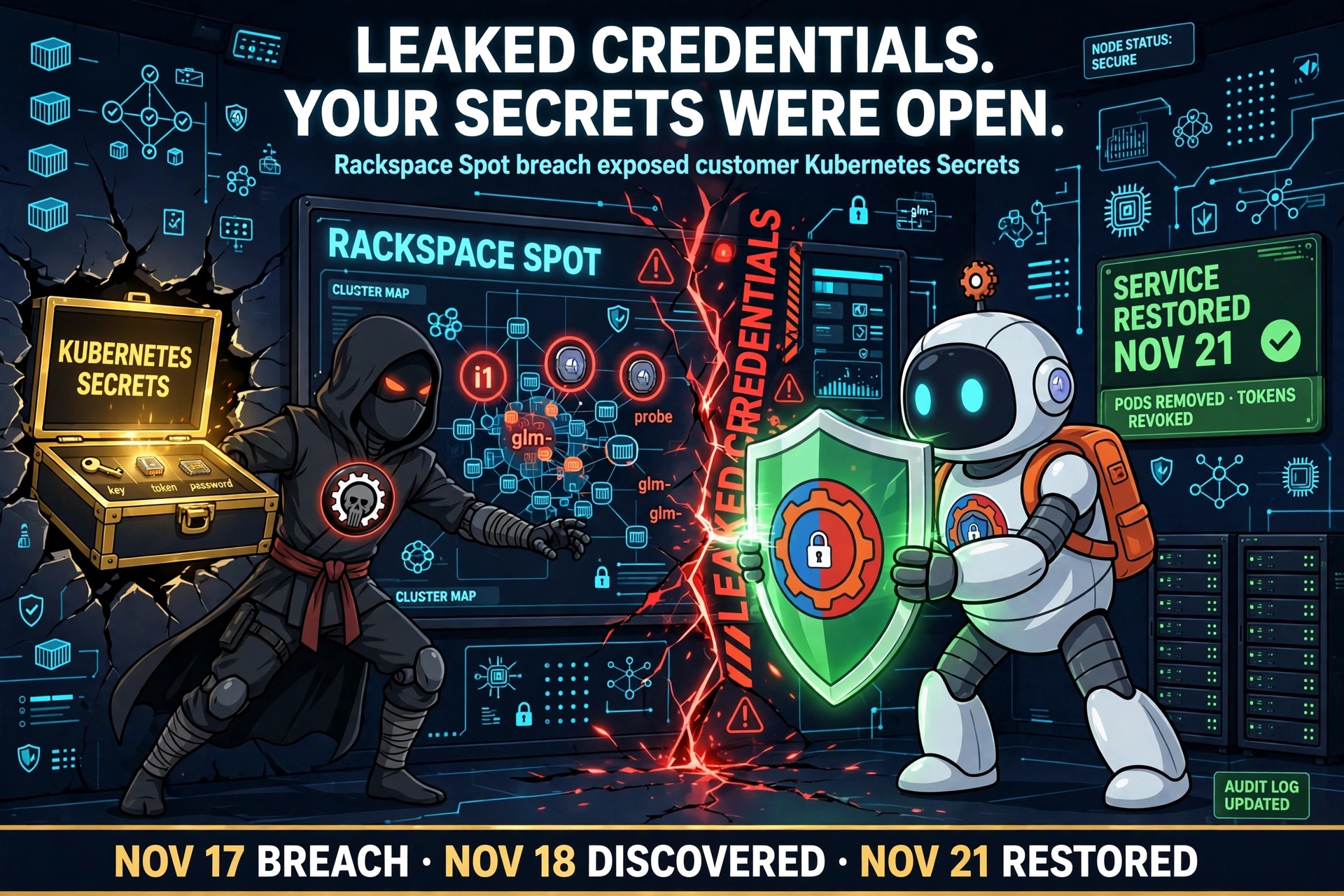
Rackspace has confirmed a breach of its Spot cloud platform that put customer Kubernetes Secrets within an intruder’s reach. On November 17, 2026, between roughly 00:20 and 22:00 UTC, an unauthorized party used leaked credentials to access parts of Rackspace Spot — the company’s platform for deploying and managing containerized applications on Kubernetes. Once inside, the attackers could act as legitimate users in some customer organizations: creating pods in their Kubernetes clusters, reading their Kubernetes Secrets, and listing their nodes and volumes.
That is a short sentence with a long blast radius. Kubernetes Secrets are where applications keep the credentials they need to run — passwords, authentication tokens, and API keys for databases, cloud services, and other systems. Rackspace says the attackers could have read any Secret in an affected user’s clusters, along with any Spot API tokens or refresh tokens held by that user. A single leaked credential did not just open one door. It handed over the keys to everything the account could touch.
Why Secrets are the crown jewels
Kubernetes Secrets are designed to be read by the workloads that need them, which means anyone who can act as a legitimate user inherits that access automatically. There was no exploit to patch and no vulnerability to fix here — the platform worked exactly as designed, for the wrong person. The credential was the attack. Everything after it was just the platform doing what the credential was allowed to do.
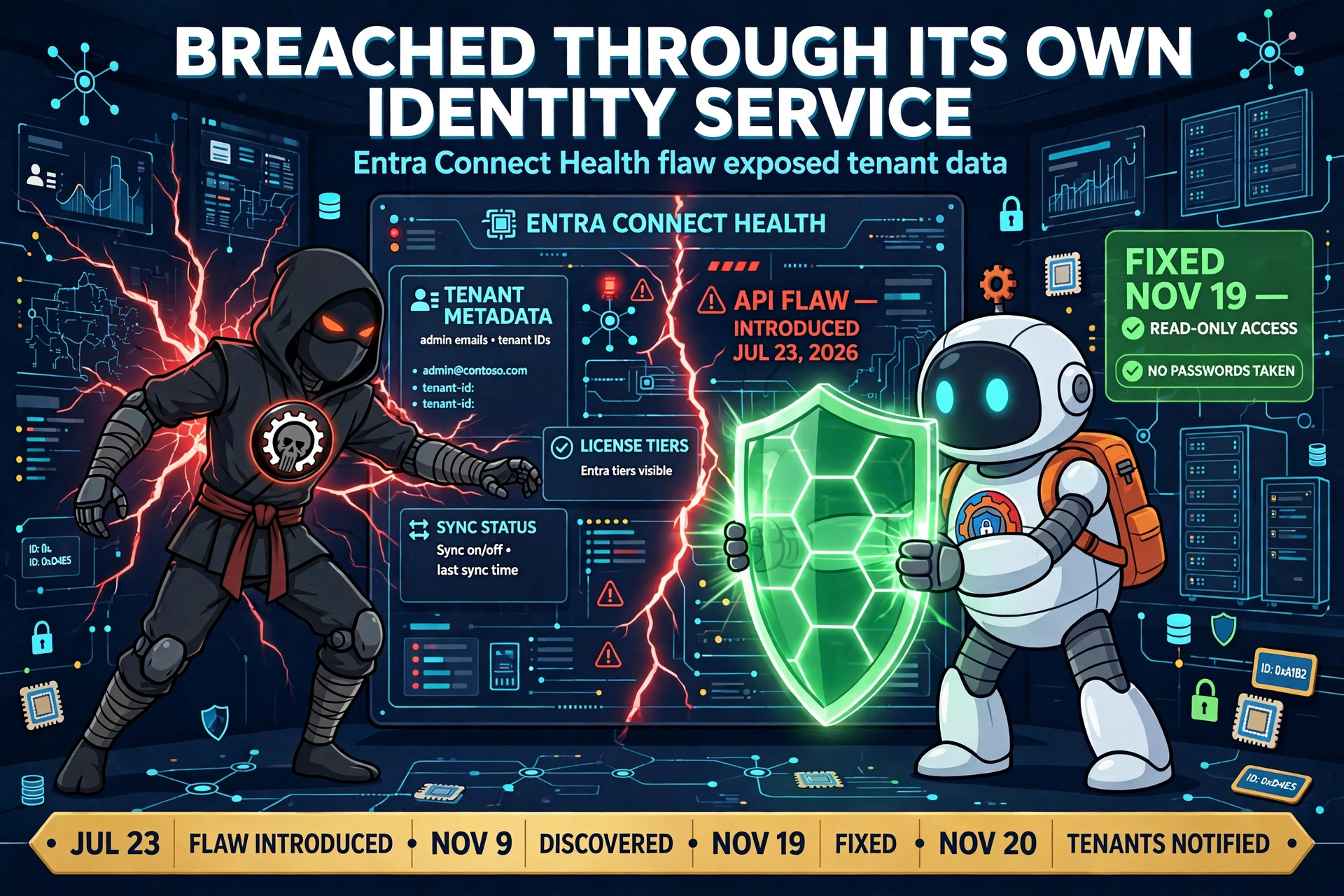
The pattern is familiar, and it is getting worse. Earlier this month, attackers abused Qubole’s trusted AWS access to break into multiple customers’ cloud accounts — one vendor key, every customer’s cloud. And Microsoft itself was breached through its own identity service when a flaw in Entra Connect Health exposed tenant data — Microsoft got breached through its own identity service. In each case the vendor’s trust became the attacker’s leverage, and the customer’s perimeter never got a vote.

How it was found — and what Rackspace did
Rackspace learned of the intrusion on November 18, after a customer reported it, and confirmed that customer’s organization was affected the same day. The company says it revoked the affected tokens and sessions, removed the unauthorized pods, rotated keys, and strengthened access controls and monitoring around the platform.
The breach also knocked out the Spot admin console for an extended period, temporarily blocking customers from managing their clusters — and from rotating the very credentials that were at risk. Platform9, which co-developed Spot with Rackspace, said the team deliberately shut all access down while it sanitized the environment. Platform9 co-founder Sirish Raghuram described the shutdown as a deliberate step, not a failure. Service was fully restored on November 21.
What Rackspace hasn’t said
BleepingComputer asked Rackspace how many customers were affected and whether any customer data was stolen. Rackspace has not responded. So the two questions that matter most remain unanswered: the scale of the breach, and whether anything was actually taken. Until Rackspace answers them, the only safe assumption for a customer in an affected organization is that every Secret the credential could reach was exposed — and should be treated as compromised, not merely at risk.
What to do now
1. Reissue your Spot API tokens. Generate new tokens and download fresh Kubernetes config files, so anything the intruder may have copied stops working.
2. Replace refresh tokens used in automation. Any refresh token held by an affected user may have been read. Replace them everywhere they are wired into scripts and pipelines, not just in the console.
3. Rotate every credential stored in cluster Secrets. Database passwords, cloud service keys, third-party tokens — if it lived in a Secret the intruder could read, rotate it. This is the expensive step, and it is the one that actually closes the exposure.
4. Audit your logs back to November 17. Review activity across databases, container registries, Git repositories, cloud storage, and third-party services for any use of a credential the intruder could have read. The intrusion window opened at 00:20 UTC; anything after that is in scope.
5. Hunt the indicators Rackspace published. Look for the IP address 23.224.79.106 and the range 23.224.0.0/15 in your logs, and for pods or objects carrying the prefixes i1, glm-, and probe. Those markers are the fingerprints of this intrusion — if they appear in your environment, the exposure was real.

The uncomfortable lesson of the Rackspace Spot breach is that it needed no zero-day and no exotic exploit. A leaked credential, a platform that trusted it, and Secrets that were readable by design were enough. The fix is rotation, not patching, and the clock started on November 17. Rackspace has restored the service and removed the intruder’s pods. Whether it can say how many customers were hit — and what, if anything, was taken — is still open. That silence is itself part of the story, and it is the reason every affected customer should rotate first and wait for answers second.