



1.6 Million Records. One Booking Platform.
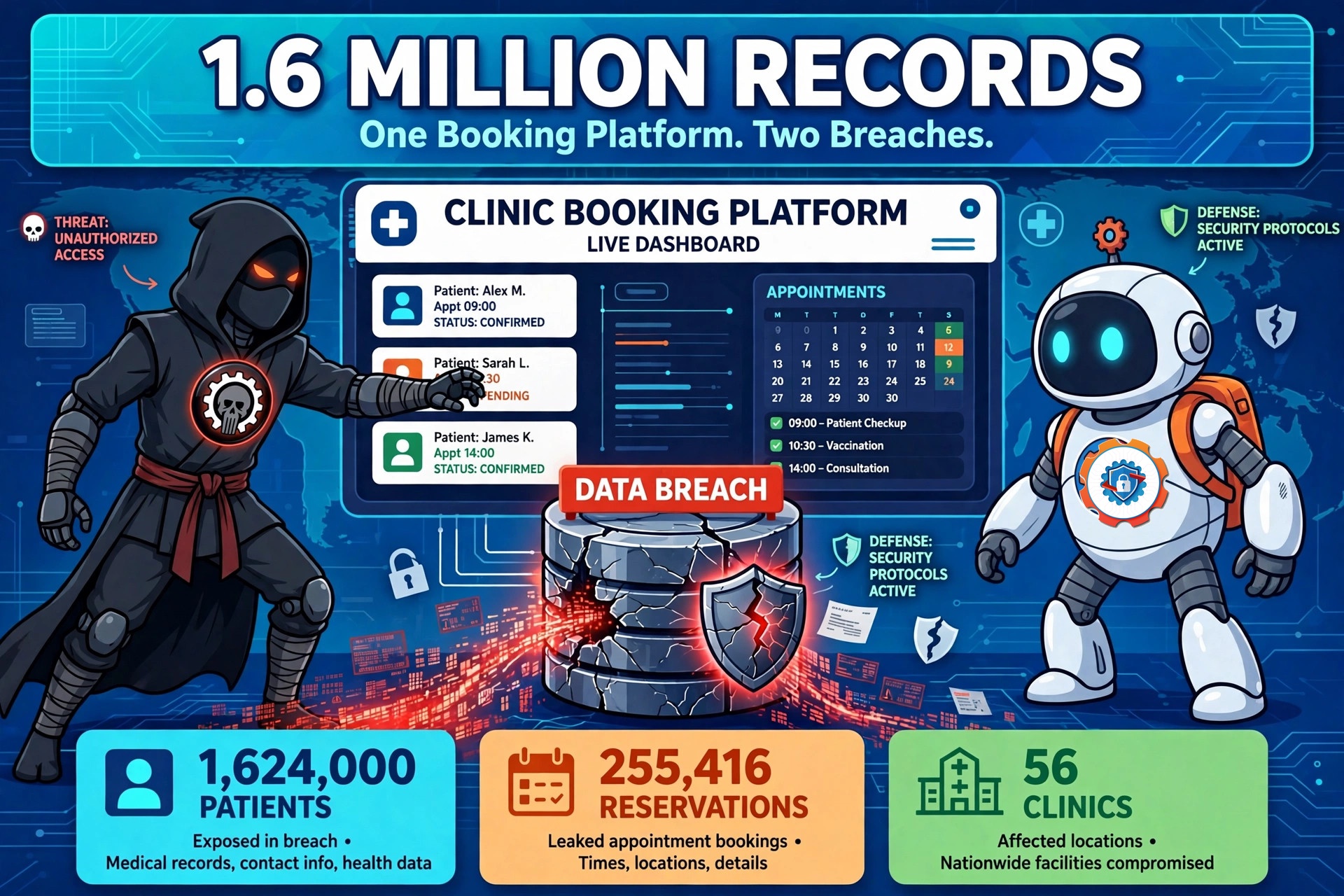
SBC Medical Group runs clinics that see seven million patient visits a year. On November 18, the company told regulators it had suffered not one breach, but two — and together they exposed the personal information of more than 1.6 million people.
The disclosure came in an SEC filing, and it reads like a case study in how healthcare data actually leaks today: not through a dramatic break-in, but through the everyday systems wrapped around the clinic — the website, the booking platform, the administrator accounts.
What happened
The first incident was discovered on November 16, when SBC found unauthorized access to databases in a website system run by its Japanese subsidiary, SBC Medical Group, Ltd. Attackers had reached and extracted customer information belonging to 1,624,000 people: full names, contact details, dates of birth, patient card numbers, member IDs, passwords, and survey responses. Not every data type was exposed for every person, but the breadth of the haul is what matters — a name, a date of birth, and a password together open doors far beyond a clinic’s website.
The same intrusion swept up 255,416 reservation requests and 217,769 inquiries submitted to SBC websites, along with thousands of treatment description records, image filenames, and customer reviews. Employees were caught in it too: around 20,000 employee account records, including names, IDs, and passwords — and for 459 employees, bank account and tax information as well.
The second incident arrived the same day, from a different direction. SBC was notified on November 16 that clinic administrator accounts on Tribeau, a third-party booking platform used by 56 of its clinics, had been accessed without authorization. The platform’s operator reported that reservation information for 12,641 people had been exposed, along with treatment names, dates, and fees for 6,804 people who had received treatment.
Two details in the filing are worth noting: SBC has not confirmed unauthorized access to electronic medical records or to its mySBC reservation site, and as of November 18 it had found no evidence the exposed data had been misused. The method of intrusion and the full scope remain under investigation, and SBC could not yet estimate the financial impact.

Why it matters
What makes this breach instructive is its shape: the attackers did not need to break into a hospital’s core systems. They got in through a website database and administrator accounts on a booking platform — the connective tissue around the clinic, where the data is just as personal and the defenses are often thinner.
That pattern keeps repeating: a booking system holds names, phone numbers, appointment times, and treatment details — exactly the material that makes a phishing message convincing. When attackers know your name, your treatment, and your appointment date, a fake “reschedule” message stops looking like spam.
The employee side matters too: around 20,000 staff account records, including passwords, give attackers a foothold for credential stuffing or quiet logins elsewhere — and the 459 employees whose bank and tax details were exposed face direct tax-fraud and account-takeover risk.
It is also a reminder that a company’s security is only as strong as its vendors’. SBC’s own databases were one incident; a third-party booking platform used by 56 clinics was the other. The same third-party trust problem surfaced in the breach of an aid agency’s grants portal, where a single web system exposed more than 20,000 users, and in the Iris Ohyama breach, where one suspicious file led to 7.7 million shoppers’ data being exposed. The systems around the core business are where the data is, and where the attackers go.
But “no evidence yet” is not the same as safe. Stolen data often sits for weeks or months before it is used, and passwords and personal details do not expire just because the news cycle moves on.
What to do
If you are, or might be, an SBC patient, start with the password: if you used the same password on an SBC website anywhere else, change it everywhere it appears — starting with your email and your bank.
Next, expect targeted phishing. Treat any message that mentions a treatment, an appointment date, or a clinic name with extra suspicion, even if it looks polished and personal — the attackers have the details that make a fake message convincing. Verify appointment changes by contacting the clinic directly, not by clicking a link in the message. Check bank statements too, and set up transaction alerts where available.
For clinic operators, the disclosure is a prompt to look hard at the booking layer. Audit every third-party platform that touches patient data: which administrator accounts exist, who holds them, whether they use multi-factor authentication, and exactly what data each account can reach. A booking vendor’s admin account should never reach more than the bookings it needs; segment booking systems from core databases, and review vendor access on a schedule — not only after an incident forces the question.

SBC’s investigation is still open, and the full scope is not yet known. What is already clear is the shape of the risk: a clinic’s most exposed data is often not in its medical records, but in the websites and booking platforms wrapped around them.