





The AI Hit Brussels. The Payslips Went Dark.
On October 22, 2026, the European Commission detected something wrong inside its own networks. Four days later it was confirmed: the EU’s executive arm was under cyberattack. Nearly a month on, two systems holding some of its most personal data — staff payslips and medical claims — have been offline for more than ten days, its crisis board has been convened, and the central question still has no answer: did the attackers take the data?
The Attack, As We Know It
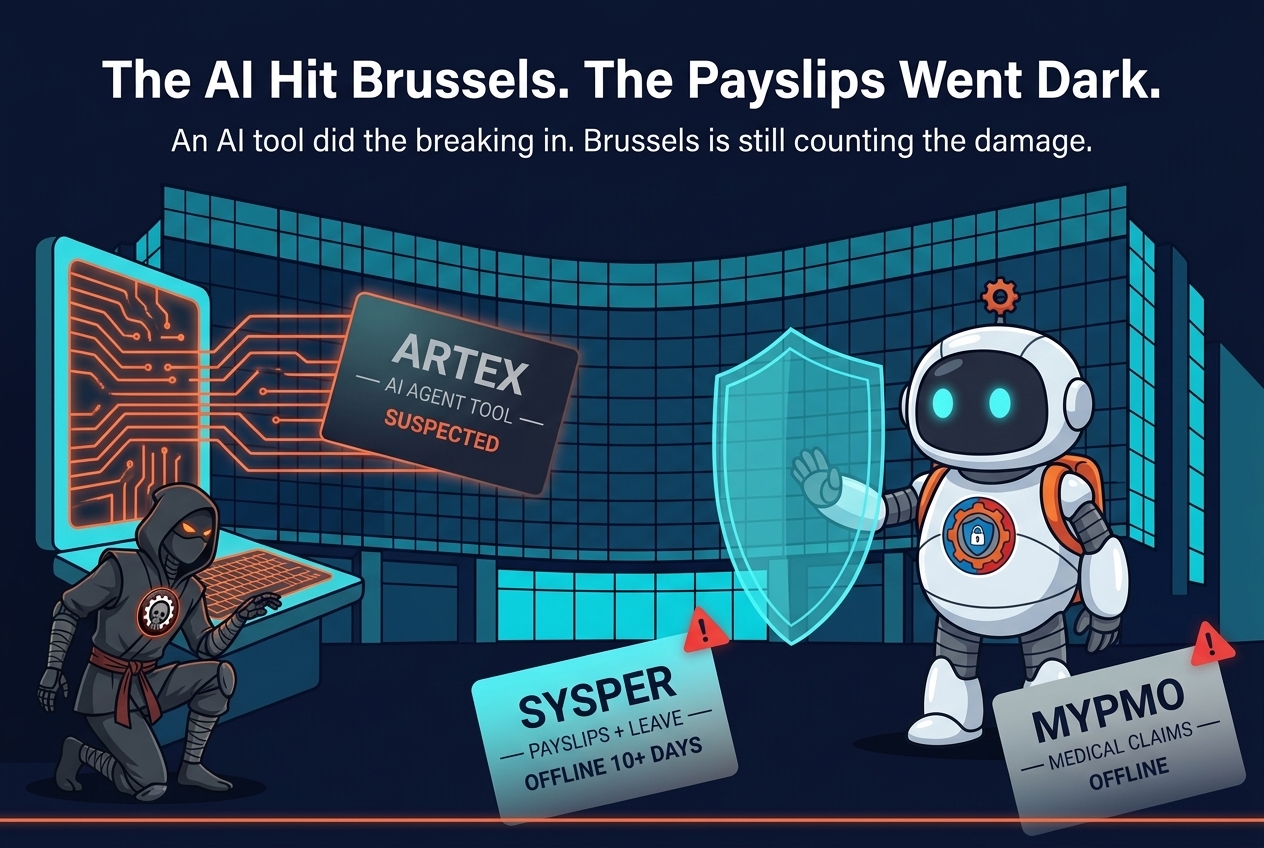
Politico first reported the incident. The intrusion was detected on October 22 and confirmed as a cyberattack on October 26 — but how the attackers got in is not public. The suspected tool is ARTEX, a publicly available AI-powered penetration-testing framework. CERT-EU, the EU institutions’ cybersecurity team, identified ARTEX use in the attack and warned on November 5 that it had spotted ARTEX-assisted attacks under its watch. ARTEX is suspected — not confirmed as the attack method, and not an attribution. No perpetrator has been identified publicly.
ARTEX is what makes this attack different: an operator gives it an objective in plain language, and the software breaks it into tasks carried out with real hacking tools. The human sets the goal; AI agents do the breaking in. The FBI flagged ARTEX in an advisory on November 13, the same tool we covered when the FBI named the tool. Researchers counted more than 1,600 ARTEX consoles exposed on the open internet by early November, the kind of loose end we flagged in The Key Was Never Retired. The AI Did the Rest.
What Went Dark
The damage so far is measured in systems, not stolen records. Sysper, the Commission’s HR platform — payslips, timesheets, leave requests — and MyPMO, which handles staff medical reimbursements, have been offline for about ten days or more. Staff could not book time off or submit timesheets. Salaries landed as usual. Sysper access had been restored earlier in the week, only for it to crash briefly again on November 18. Whether anyone snooped on payslips is unestablished.

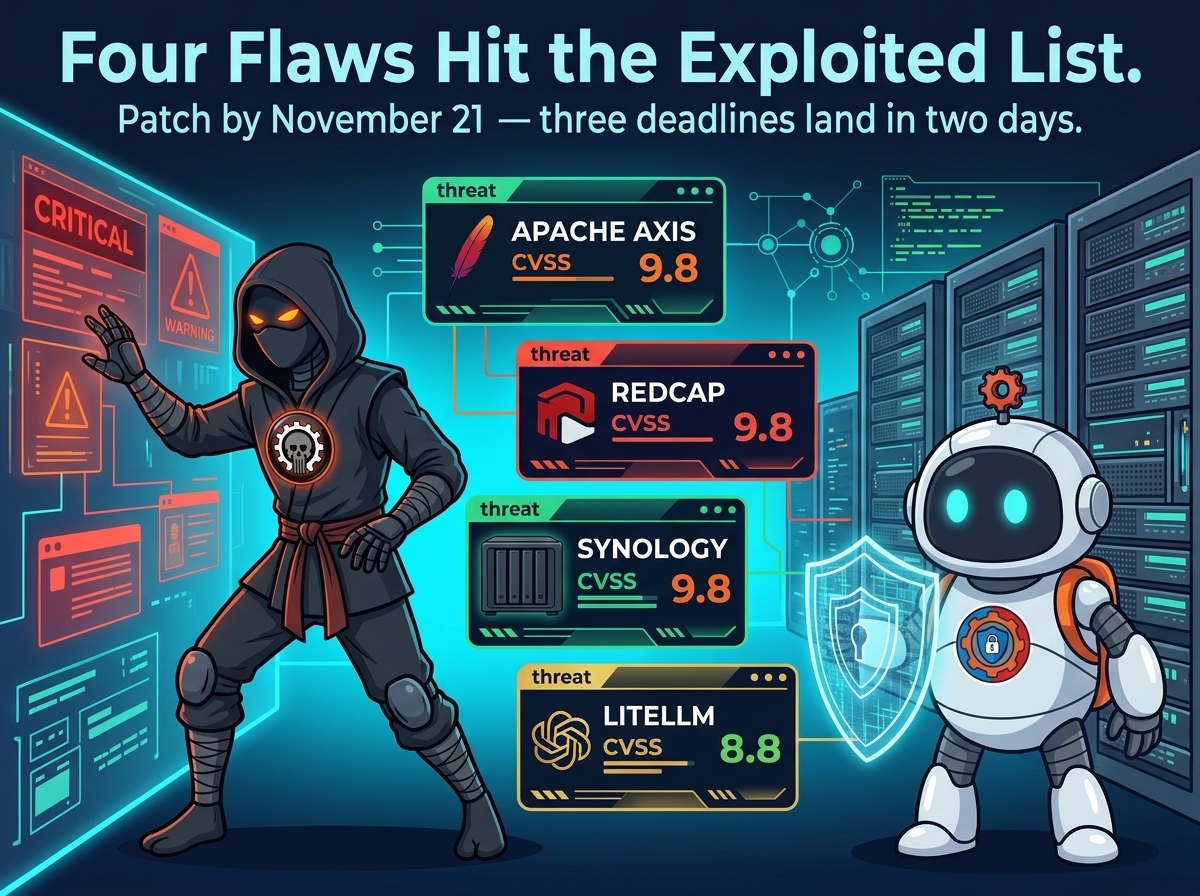
Four systems converged on one risk: the staff data inside Sysper and MyPMO.
What Brussels Is Saying
The Commission believes it contained most of the attack, but the full extent of the damage remains unclear, with no confirmed exfiltration count. It convened its highest-level internal crisis body, the Corporate Management Board, earlier in November, and Tech Commissioner Henna Virkkunen briefed fellow commissioners on Wednesday, November 18.
At a November 19 press briefing, spokesperson Thomas Regnier said: “The European Commission has taken the necessary steps in response to a detected cyber campaign.” He added: “Individual systems were targeted and, in line with our standard practice, we have informed those concerned.” Regnier said the investigation found no evidence of a data breach affecting staff as a whole, and he knew of no ransom demand. The European Data Protection Supervisor was notified; the Commission’s IT department, DG DIGIT, is assessing the damage. Under EU Regulation 2018/1725, a confirmed personal data breach must normally be reported to the supervisor within 72 hours.

Contained is not the same as answered: the investigation is still open.
Why It Matters
This is not the Commission’s first breach. In March 2026, attackers stole roughly 91.7 gigabytes of data, including personal information and email content, from cloud infrastructure hosting Europa.eu websites. A January intrusion into its mobile-device systems may have exposed names and phone numbers. Three incidents in one year, all reaching for the same thing: the personal data of the people who work there.
The ARTEX angle raises the stakes. When a tool takes plain-language objectives and turns them into hacking tasks, the skill floor drops — and with more than 1,600 of its consoles exposed on the open internet, it is within reach of anyone who goes looking. The Commission has a professional security team and still lost its HR and medical systems for more than ten days. Smaller organizations should read this as a rehearsal of their own worst week.
Four Checks to Run Now
1. Hunt for ARTEX indicators. CERT-EU warned on November 5 that it had spotted ARTEX-assisted attacks against organizations under its watch. Use that warning as the starting point: check your environment for the framework’s known indicators.
2. Audit internet-exposed AI and agent consoles. More than 1,600 ARTEX consoles were reachable from the open internet by early November. If you run AI agent tooling, a remote-access console, or an admin panel, verify what is exposed — and lock down anything that answers to the internet without authentication.
3. Review HR-system access logs. Systems like Sysper hold payslips, leave requests, and timesheets — the personal data attackers want. Pull the access logs for your HR and benefits platforms covering the last month and look for unusual access, bulk exports, or logins outside normal hours.
4. Verify “contained” before you restore. The Commission believes it contained most of the attack, yet Sysper crashed again on November 18 after access had been restored. Do not bring a system back on a belief: confirm the scope with logs and monitoring first, and keep a restored system under observation until the investigation says otherwise.
Brussels contained most of the attack. It still cannot say what the attackers took. That gap — between contained and answered — is where the damage lives, and every organization should close it in its own environment now.