







Japan’s Fastest Supercomputer. Taken Offline by a Dashboard.
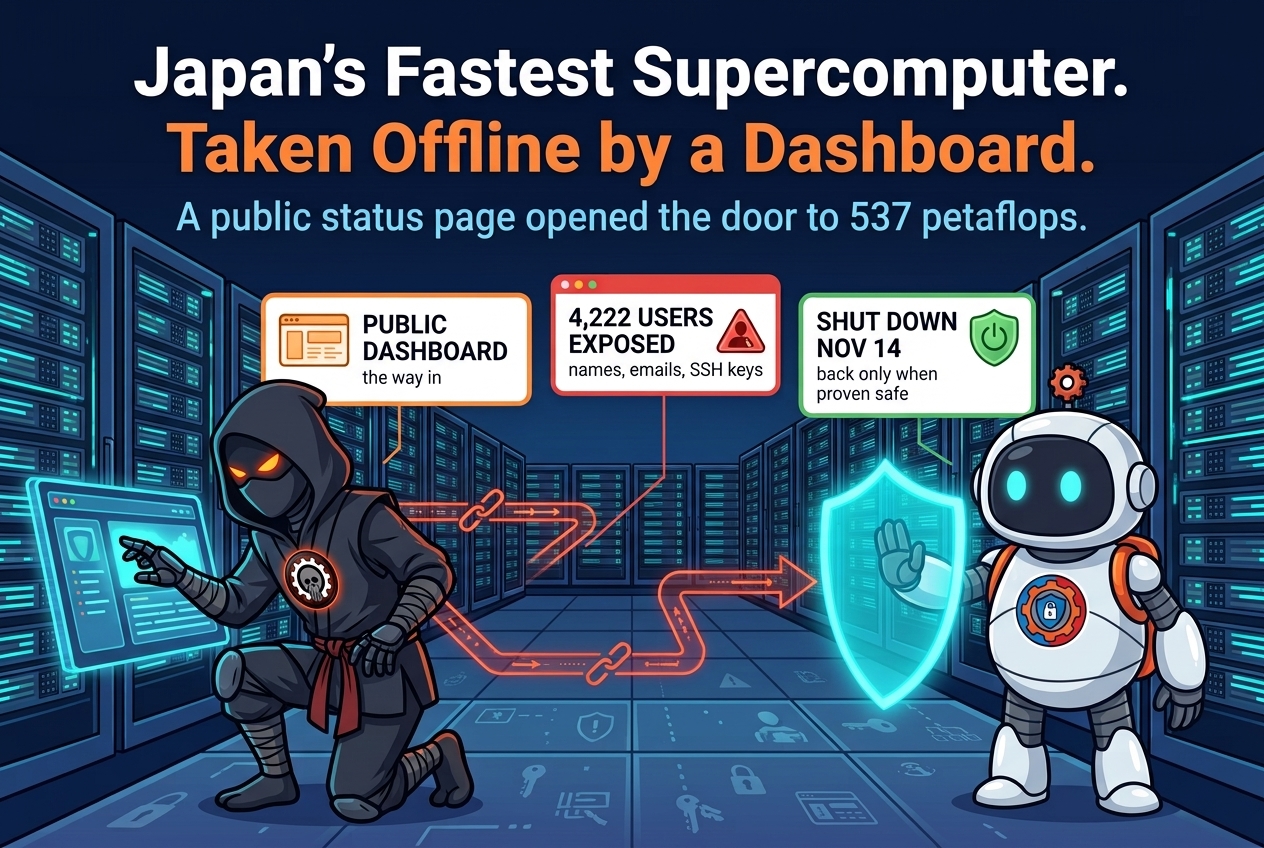
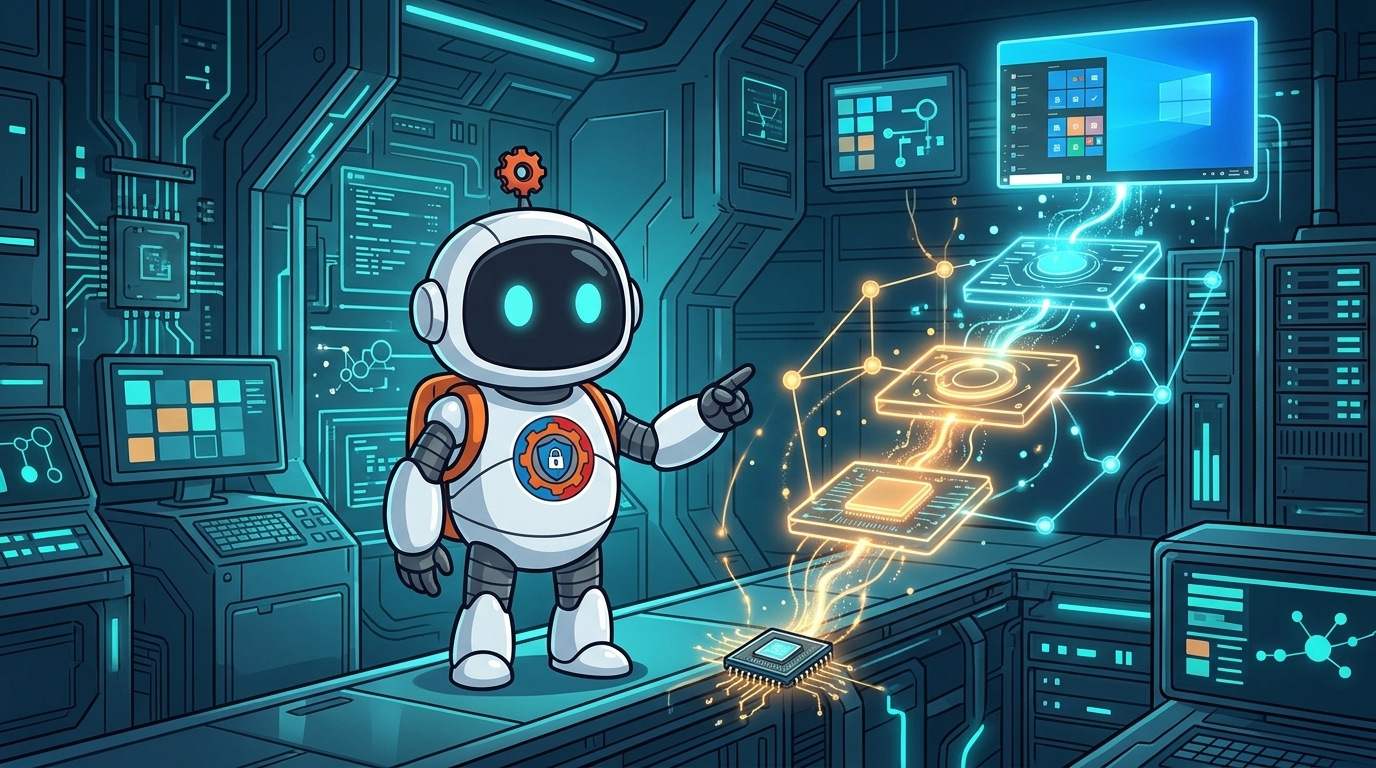
Japan just switched off one of the most powerful computers on the planet — not because the hardware failed, but because an intruder walked in through a status page.
RIKEN, the research institute that runs the Fugaku supercomputer, took the machine offline on November 14 after discovering a breach. Between November 10 and 13, an unauthorized party exploited Fugaku’s public dashboard — the page that simply shows whether the supercomputer is running — to reach multiple internal servers, then planted malware built to go after user data.
That is the part worth sitting with. The door was not a forgotten admin panel or a zero-day in some exotic component. It was the public-facing status display, the kind of page every organization runs and almost nobody treats as an attack surface.
What was exposed
The intruder got hold of the names, email addresses, and user IDs of 4,222 Fugaku users, plus the names and email addresses of 375 users of Rikyu, RIKEN’s smaller AI-research supercomputer. Worse, the exposed material included SSH private keys and access keys that users had stored on the system, along with research data files sitting on users’ machines.
That last detail turns a data exposure into an ongoing incident. A stolen SSH private key is not a record in a leaked database — it is a working credential. RIKEN confirmed the attacker already tried using some of the stolen access keys to connect to additional systems. The investigation found no further unauthorized access and no confirmed theft of research results, but “no confirmed theft” is not the same as “nothing happened.” The picture is still incomplete.
Two things remain unknown: the exact method used to get through the dashboard, and who was behind it. No attribution has been made.

The machine that went dark
Fugaku is a 537-petaflops supercomputer in shared use since March 2021, running drug discovery, severe-weather forecasting, and simulations of how airborne viruses spread. Rikyu, its smaller sibling at 64 petaflops, handles AI scientific research. Both are shared by researchers from academia and industry — which is why one breach touches thousands of people at once.
RIKEN’s response was decisive: shut Fugaku down, disable users’ login keys, and tell every user to revoke and replace any credentials they had stored on the machine. Users were also warned to watch for suspicious emails impersonating RIKEN — the classic second wave, where stolen names and email addresses become raw material for phishing. Operations resume only once RIKEN is sure it is safe. The remediation list reads like a rebuild, not a patch: fix the exploited vulnerability, rebuild the compromised servers, review the network configuration, and add advanced AI-driven security measures.
Why this one matters
Supercomputers feel like a different world from ordinary IT, but this breach is a warning aimed squarely at ordinary IT. The entry point was a monitoring dashboard — a read-only-looking page whose entire job is to tell the world “we are up.” Every organization has equivalents: status pages, health checks, and monitoring portals that were built to be seen and then forgotten. Attackers love them precisely because defenders stop looking at them.
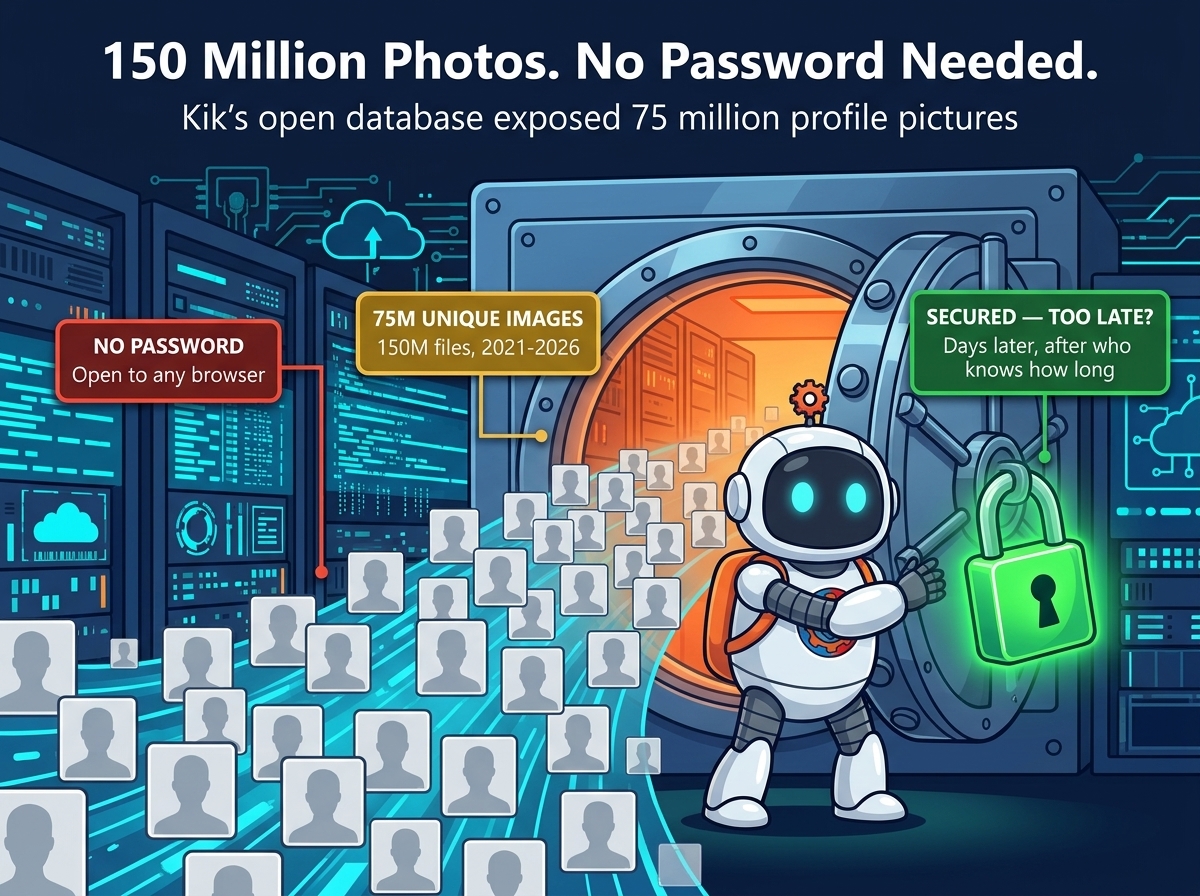
The second lesson is about blast radius. Fugaku’s users are researchers, not employees of one company, so one breach exposed thousands of people across many institutions — and the stolen keys were immediately useful somewhere else. That is the same pattern behind the 150 million photos left exposed with no password at all: a service built to be reachable becomes a service built to be robbed, and the damage spreads far beyond the first system.
The third lesson is the shutdown itself. RIKEN chose to take a flagship national machine offline rather than run it while the intrusion was unresolved. That is the right call, and an expensive one — every day Fugaku sits dark, research stalls.

Four checks to run this week
1. Inventory every public-facing service — dashboards included. List everything reachable from the internet. Status pages, monitoring portals, and health-check endpoints count. If a service is public, treat it as an entry point and patch it like one.
2. Segment the watchers from the watched. A status dashboard should never share a network path with the systems it reports on. Put monitoring and status services in their own segment, with no route into internal servers. The dashboard can show the machine is up without being able to touch it.
3. Stop storing long-lived keys where users work. SSH private keys and access keys sitting on a shared system are a breach waiting to be harvested. Move to short-lived credentials or a secrets manager — and revoke anything stored on a system that has been touched, even if you cannot prove it was taken.
4. Watch for the keys after the breach, not just during it. Stolen credentials get tried again, days or weeks later, against other systems. Monitor logins with revoked keys, alert on unusual access patterns, and warn users that phishing emails impersonating your organization are the likely next step.
Fugaku will come back. The research will resume, and the dashboard will get the scrutiny it should have had all along. The uncomfortable question is how many other status pages and monitoring portals are sitting on the public internet right now, one flaw away from the same story — and whether their owners will find the flaw first, or read about it afterward.