






Two Banks on the List. One Breach, One Bug.
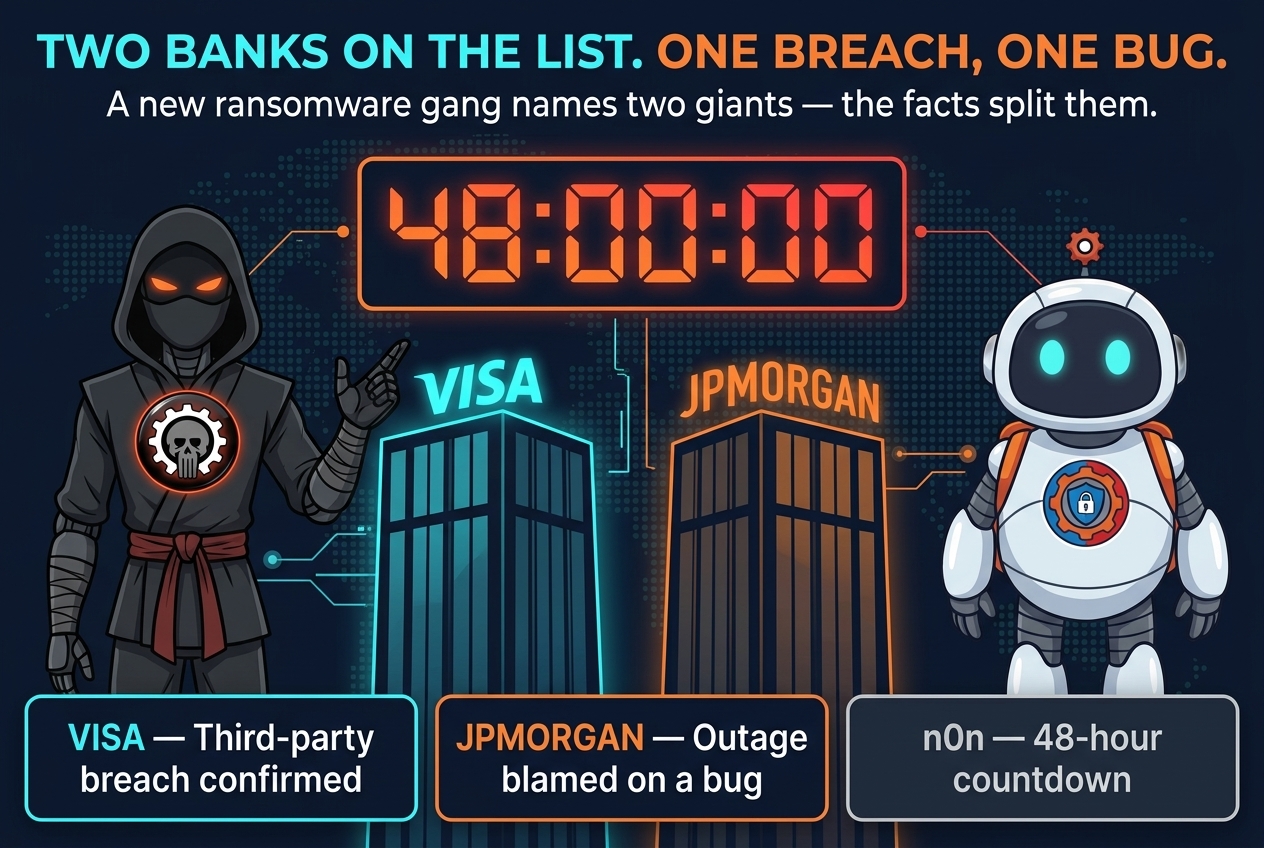
A new ransomware gang put two of the biggest names in finance on its leak site and started a 48-hour countdown. Visa and JPMorgan Chase. The listing alone was enough to set off alarms — both companies sit at the heart of the global financial system, moving money and holding personal data for millions of people.
But the two stories split the moment you look past the listing. One company confirmed a real breach — just not of its own systems. The other says there was no attack at all. And the gang itself has offered almost no proof of what it claims to hold.
What the gang claims
The gang calls itself n0n. It listed Visa and JPMorgan Chase among its alleged victims and set a 48-hour countdown before a promised data leak. At the time of writing, the clock is ticking — but the attackers have offered few details about what they claim to have stolen.
That vagueness is the point, and it is also the tell. A leak-site listing is a pressure tactic: name a giant, start a countdown, and let the company’s customers and shareholders do the worrying. The names on the list do the work whether or not the data behind them is real.
What Visa actually confirmed
Visa confirmed it is aware of the claims, and it confirmed that an incident did happen — with a third-party service provider in the Asia Pacific region. That is where the confirmation ends.
“Visa’s systems were not involved and were not impacted. There is no indication that payment data such as card numbers have been affected,” a Visa spokesperson told Cybernews. The company has not identified which third-party provider was hit.
So the Visa half of the story is real but limited: a breach at a provider, not at Visa, with no sign so far that card numbers were touched. It is the latest reminder that the weakest link in a big company’s defenses is often a vendor it does not fully control.

What JPMorgan says
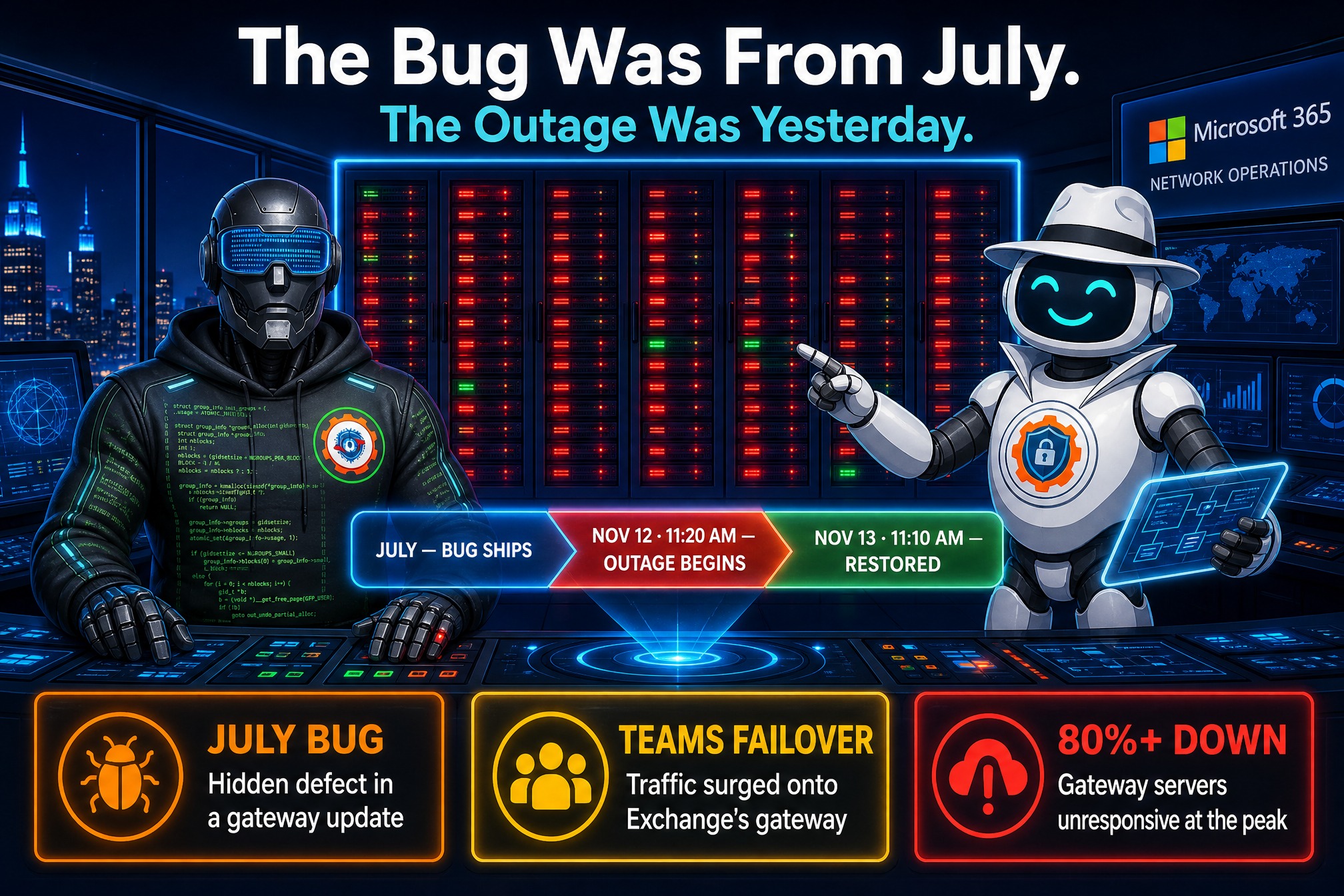
JPMorgan Chase tells a different story entirely. The bank is experiencing a service outage — but it says the disruption came from a software bug, and that there is “no evidence” linking the incident to a cyberattack.
The bank has not confirmed whether the outage has any connection to the ransomware gang’s claims. On the facts available today, the two things — an outage and a listing — may simply be happening at the same time, with no proven link between them.
That distinction matters. Outages happen for ordinary reasons, and ransomware gangs know that a company mid-outage is a company under pressure. A claim timed to an unrelated bug still reads as a threat.
Who is n0n
n0n is a new player. The gang was first tracked in mid-September, and it has wasted little time building a victim list full of recognizable corporate names. Just last week, it claimed travel giant Expedia, alleging it stole billions of travelers’ records.
The pattern is familiar: a new gang picks the biggest names it can find, because big names make the threat feel bigger. Whether the data is real, exaggerated, or recycled from an earlier breach is something only the evidence — or the deadline — will settle.

Why the split matters
Banks have been the target before — earlier this month, attackers used a French bank’s own account to move $133 million — and financial crime keeps finding new rails, as the U.S. cutoff of the MEXC exchange over $16 billion in illicit transactions showed. But a listing is not a breach, and a countdown is not evidence.
Gangs inflate. Companies confirm what they can, when they can. The gap between those two things is where bad decisions get made — by customers who panic, and by defenders who chase a claim instead of a fact.
What to do
Do not treat the listing as proof. Wait for the companies’ own statements and for evidence — leaked samples, a named provider, a confirmed scope — before assuming your data is exposed.
Check your statements anyway. Turn on transaction alerts on your cards and scan recent activity. It is a good habit in any week, and it costs nothing in a week like this one.
If you run a business, look at your vendors. Visa’s incident came through a third-party provider, not through Visa itself. Know which of your vendors can touch your data, and what happens when one of them is breached.
Watch the 48-hour deadline. If data appears when the countdown ends, the story changes — and so does the advice. Until then, the facts say: one limited third-party breach, one software bug, and a gang with a big list and thin proof.