





The Warning Never Came. The Chlorine Kept Rising.
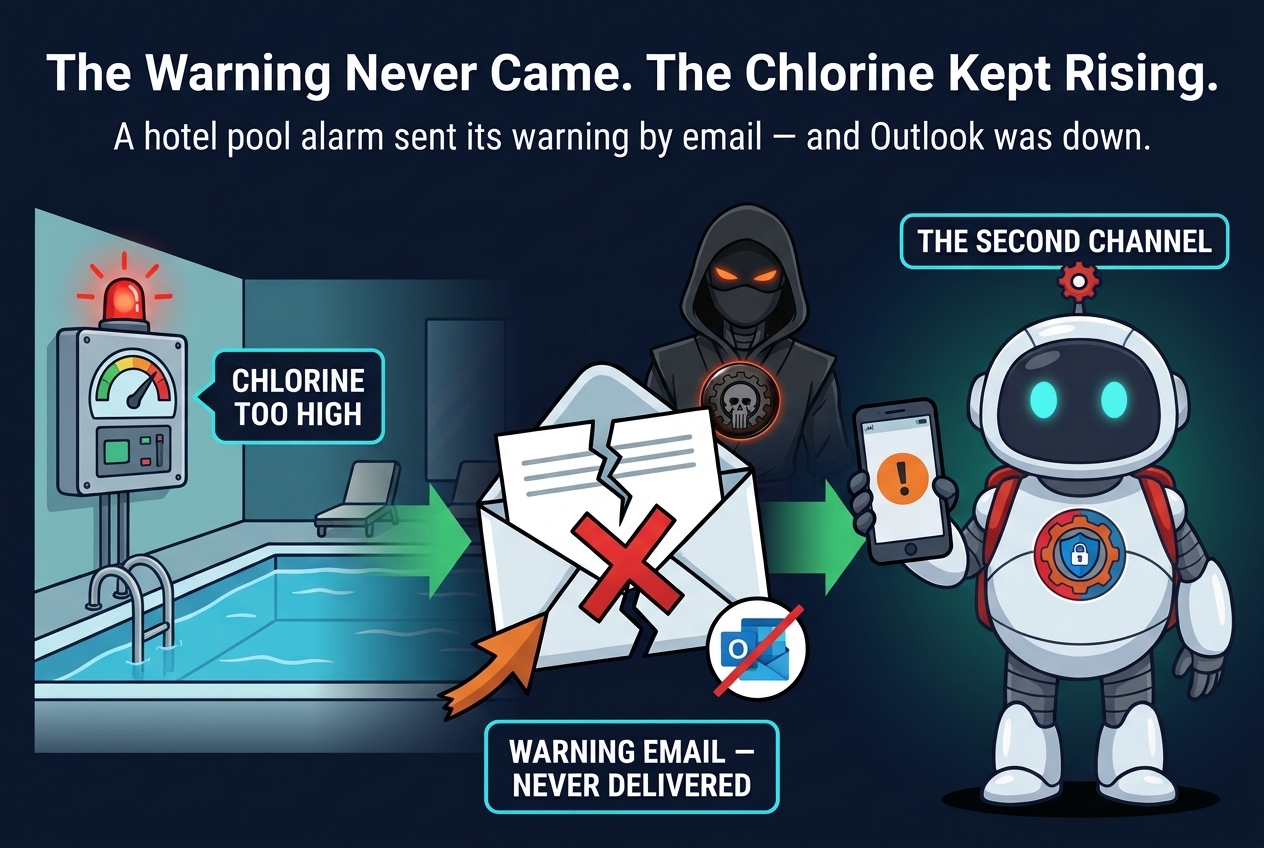
On Friday, fifteen guests at a hotel pool in Germany were injured by chlorine — not because the pool’s safety system failed, but because the email it sent to warn staff never arrived. The pool was at the Ling Bao hotel, inside the Phantasialand theme park in Brühl. Four guests were taken to hospital, one remained under observation, and around 40 first responders were sent to the hotel. The warning emails were stopped by the same Microsoft outage that took down Outlook around the world.
The hotel’s pool runs on an automatic maintenance system. When chlorine levels drift outside the safe range, the system is supposed to send an email alert to staff, who can then correct the dose before anyone is harmed. That design works fine on an ordinary day. On Friday it ran into the worldwide Microsoft outage that knocked out Outlook between November 12 and 14. Phantasialand confirmed to German broadcaster WDR that the outage hit Outlook services in the region and stopped the warning emails from reaching hotel staff. With no alert, too much chlorine was added to the pool — and guests swam in water that had become dangerously over-chlorinated.

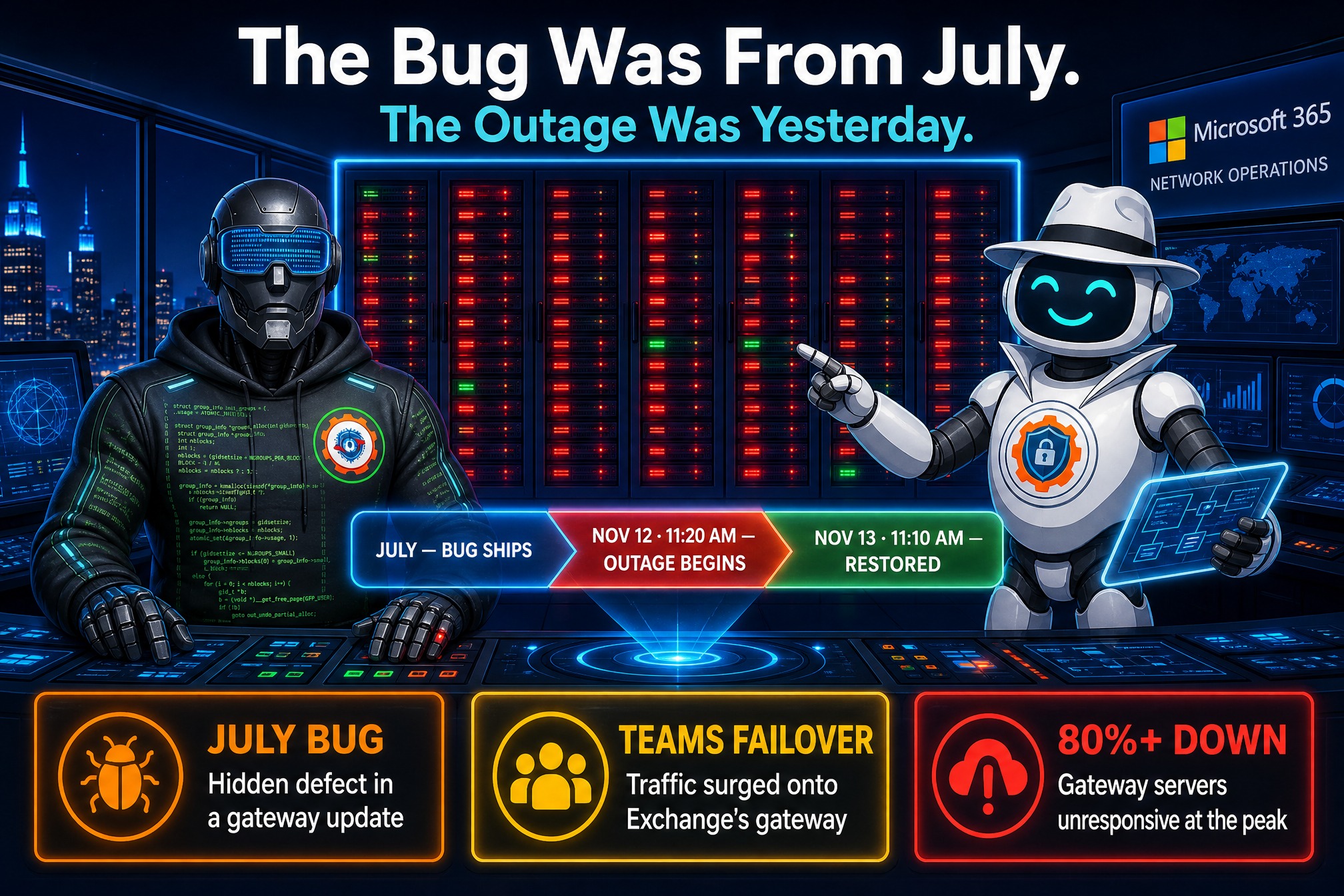
This is the consequence of an outage we have already covered in full. Between November 12 and 14, the Microsoft 365 outage took down Outlook, Teams, Copilot, and OneDrive, and its effects showed up everywhere: in Japan, where an estimated 78% of companies rely on Microsoft infrastructure, some workers reportedly dusted off fax machines; hospitals, schools, and courts in Australia were disrupted; in the United States, jurors were sent home and protection orders stalled. Microsoft executive vice president Charles Lamanna later explained the cause: a bug introduced with a software update deployed in July, which went unnoticed for more than three months because Microsoft’s testing could not reproduce the conditions that triggered it. At one point, more than 80% of the affected servers had stopped responding.
What makes the Phantasialand incident different from the rest of the outage’s fallout is that nobody’s inbox was the point. The point was a physical safety system that treated email as its only alarm. The sensor did its job. The software did its job. The message was composed and sent. Every link in the chain worked except the one nobody had thought to question: the assumption that email would simply be there. That is the pattern worth noticing, because it is not unique to hotels. Any system that watches something dangerous — a pool, a cold-storage room, a server room — and reports trouble through a single channel has the same hidden flaw. When the channel goes down, the warning dies silently, and the first sign of trouble is the harm itself. We saw the same shape of failure earlier this month, when hacked refrigeration systems spoiled food across hundreds of French stores: the monitoring existed, but the warning never reached the people who could act.
For hotels, leisure operators, and any business that leans on automated alerts, three checks are worth doing this week. First, give every safety alert a second channel. If a warning only travels by email, add an SMS, a push notification, or a dashboard that staff actually watch — and make sure the second channel does not run on the same provider as the first. Second, test the alert path, not just the sensor. Send a test alert every month, and again after any outage, and confirm a human actually received it. A sensor that can detect a problem is useless if nobody ever proves the message arrives. Third, keep a manual backup. Chlorine, temperature, pressure — whatever the number is, someone should still check it by hand on a schedule, even when the dashboard looks fine. The Phantasialand hotel has since replaced the pool water and reopened the swimming area. The fix for the next hotel is cheaper than the fix for this one was.

And if you are the guest, not the operator, the advice is simpler. A properly chlorinated pool should not sting your eyes, burn your throat, or smell strongly of chemicals — a sharp chemical smell is usually a sign that chlorine has reacted with contaminants, not that the water is extra clean. If the water smells wrong, your eyes sting, or you feel short of breath, get out, move to fresh air, and tell staff immediately. If symptoms persist, seek medical help and say you were exposed to pool chemicals. Fifteen people learned this the hard way last Friday. None of them needed to.
The Microsoft outage is over. The lesson is not. Every system that can hurt people when it goes quiet deserves an alarm that cannot be silenced by a single company’s bad week. Build the second channel before you need it — because the day you need it is the day the first one is already down.