




One Stolen Login. 7,870 Drivers’ Licenses Gone.
Uber has confirmed it. A breach at one of its artificial intelligence vendors exposed the driver’s license information of thousands of Uber drivers — and the total is still climbing. The company learned about the incident on October 9, cut its data connections with the vendor, and launched a forensic investigation. The findings are now public, and they turn a vendor breach into a real identity problem for the drivers caught in it.
What Happened
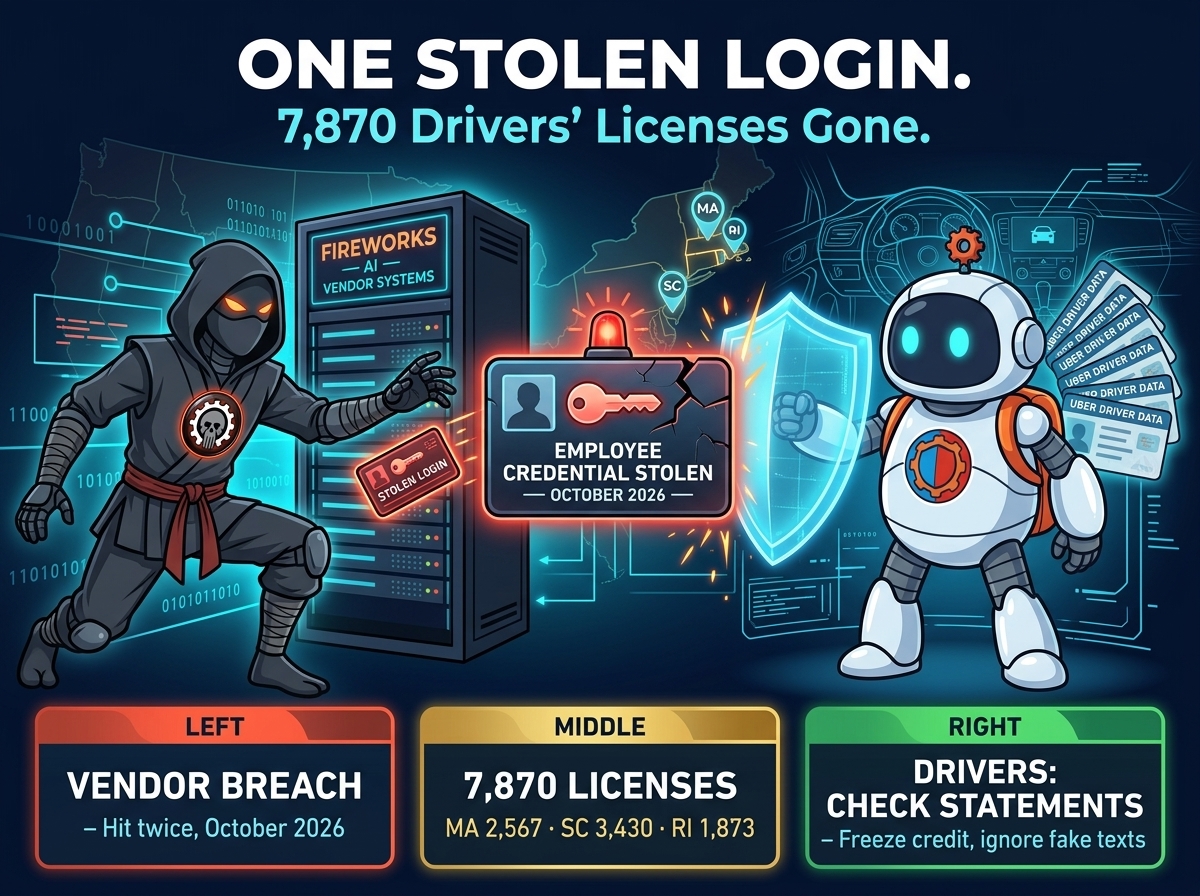
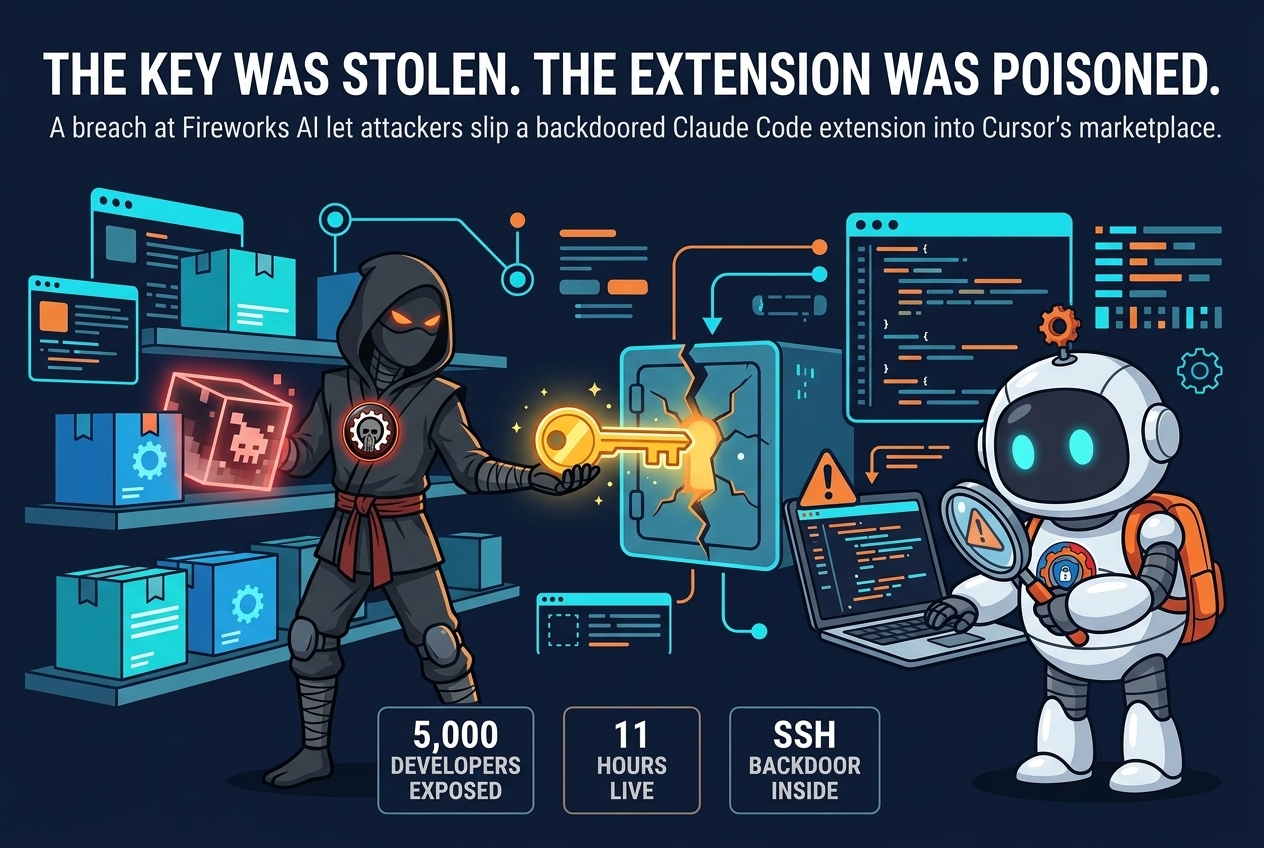
The vendor is Fireworks AI, a platform that runs high-performance inference for open AI models. In October 2026, Fireworks AI suffered two separate security breaches. Attackers got in using the credentials of one of the company’s own employees, then moved through its internal systems and copied customer-related data.
What they took was broad: resource metadata — identifiers, display names, descriptions, creation times — along with billing information including shipping addresses, payment history, account balances, and credit usage. For certain customers, model weights and datasets were compromised too.
Uber was one of those customers. After being notified on October 9, Uber immediately severed its data connections with Fireworks AI and opened a forensic investigation. That investigation confirmed an unauthorized party had used the compromised credentials to access Uber data. We covered the original Fireworks AI breach when it broke — the provider was hit twice in a single month, and Uber is now the biggest name to confirm it was caught in the blast.

The Numbers So Far
Breach notices reviewed so far put the damage at 7,870 drivers’ licenses across three states: 2,567 in Massachusetts, 3,430 in South Carolina, and 1,873 in Rhode Island. A filing in Illinois confirms that some residents there also had driver’s license information stolen, but the number of affected people is still pending. Drivers in California have been notified as well.
Those figures are a floor, not a final count. More states may surface as notifications go out, and the Illinois total alone could push the number higher. What is certain is that thousands of real identity documents — not usernames, not passwords, but government-issued licenses — are in attackers’ hands.

Why This One Matters
Uber was not breached directly. Nobody broke into Uber’s systems. The attackers broke into a vendor’s systems with a vendor employee’s login, and Uber’s data was sitting inside. That is the supply-chain lesson in its purest form: your security is only as strong as the weakest login at a company you may never have heard of.
It is also a pattern: the same vendor sits at the center of another incident we covered this week, in which a stolen credential led to a poisoned developer extension. One compromised credential at one provider keeps producing damage across completely different victims.
And a driver’s license is a particularly nasty thing to lose. You can reset a password in a minute and replace a card in a week. A license number is a durable piece of identity — the kind of document used to verify who you are, open accounts, and pass checks. Once it is copied, it does not expire, and the person it belongs to cannot simply change it.
If You Drive for Uber, Do These Checks
1. Review your statements line by line. Check bank and card activity for charges you do not recognize, and keep checking for months — stolen identity data is often used slowly, not all at once.
2. Watch for identity misuse. Unexpected account alerts, verification messages, or mail about accounts you never opened are red flags. Act on them the day they appear, not the week after.
3. Consider a credit freeze. A freeze stops new accounts from being opened in your name, and it is free to place and lift. At minimum, set up fraud alerts.
4. Treat unexpected “Uber” messages with suspicion. Attackers holding real driver details can write convincing phishing texts and emails. Never follow a link from a message — open the Uber app yourself and check there.
If Your Company Hands Data to a Vendor
1. Know who holds your sensitive data. Keep a live inventory of every vendor with access to personal information, and what exactly they can reach. If you cannot list them, you cannot protect them.
2. Demand strong credential hygiene from vendors. Phishing-resistant multi-factor authentication for staff, short-lived credentials instead of permanent keys, and no standing elevated privileges. Fireworks AI revoked and replaced credentials, removed unnecessary elevated access, and tightened controls after the fact — those controls should have been in place before.
3. Have a revocation plan ready. When a vendor reports an incident, minutes matter. Know in advance how you will cut data connections, rotate shared credentials, and verify what was accessed — Uber severed its connections the same day.
4. Put breach notification in the contract. Fast, detailed notification and audit rights should be written terms, not favors. The sooner you know a vendor is breached, the sooner your own investigation starts.
The Illinois count is still pending. But the lesson is settled: one stolen employee login at a vendor you never chose exposed thousands of drivers who never touched that vendor’s systems. Audit your vendors the way you audit yourself — because attackers already do.