















Microsoft’s Worst Outage Ever. Still Not Over.
Eighteen hours after Microsoft acknowledged that Microsoft 365 was down around the world, the outage still isn’t over.
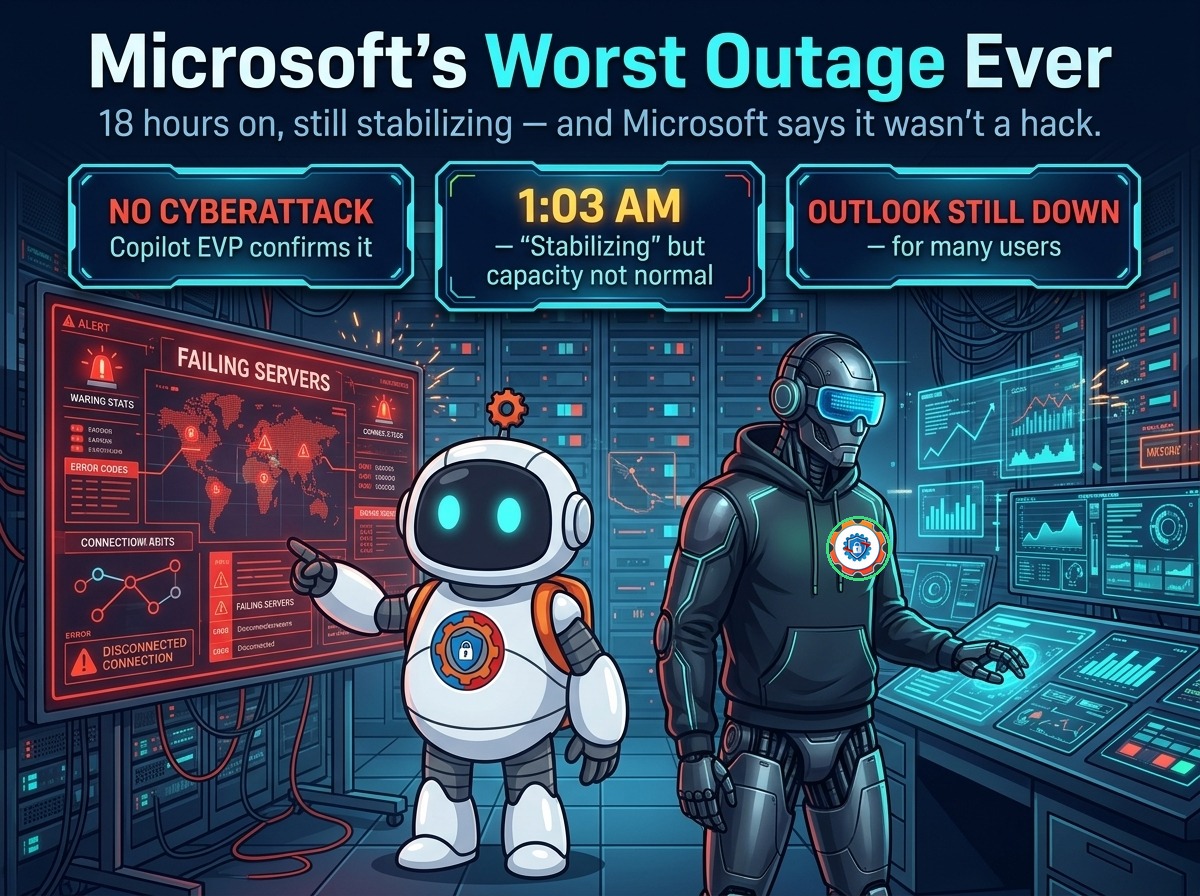
When we covered the outage yesterday afternoon, Microsoft’s last update said the incident was still open, recovery was under way, and there was no ETA. Overnight, the picture got clearer — and worse. Microsoft’s own Copilot chief has now confirmed there was no cyberattack, apologized for the disruption, and the company is calling this the worst outage in its own history. Yet as of Microsoft’s last update, posted at 1:03 AM Pacific (4:03 AM Eastern), the service was only “stabilizing” — capacity had still not returned to normal, and Microsoft has not officially declared the outage resolved.
“No indication” of a cyberattack
With an outage this widespread and this long, the first question everyone asked was whether Microsoft had been hacked. The answer, now stated plainly by the company’s most senior Copilot executive, is no.
“We regret that today’s outages caused disruptions for our customers, and we are working to address the issue,” Charles Lamanna, Microsoft’s executive vice president of Copilot, Agents, and Platform, said in a statement.
“I can confirm that there is no indication this is the result of malicious or cyber activity,” Microsoft said in the same statement.
That matches everything Microsoft has published since the outage began. The cause was inside Microsoft’s own data centers: a large number of its servers unexpectedly became unavailable after failing their automated health checks, and the traffic they were carrying landed on the servers still standing — which then buckled under the extra load. Request volume never spiked. The capacity vanished; the demand didn’t grow. There is no intrusion to point to, no attacker claiming credit, and no evidence of one. This was, by every account including Microsoft’s own, entirely Redmond’s fault.

Overnight: from red lights to “stabilizing”
The road to this morning ran through a full day of setbacks, told in Microsoft’s own status updates.
The outage began at around 8:30 AM Pacific on Thursday. By 10:58 AM Pacific, Microsoft admitted it was a critical outage and started moving traffic away from the affected infrastructure, restarting its own servers to shed load. At 11:30 AM Pacific, it named the cause: servers becoming unavailable, pressure on the rest. A configuration change went into testing at 11:43 AM and, by 3 PM Pacific, most products — Outlook and Teams included — were stable again.
But “mostly” did a lot of work in that sentence. Microsoft itself said the recovery was not to the extent it “expected,” and at 3:59 PM Pacific it warned that restored servers could become unresponsive again.
The real turn came overnight. At 11:25 PM Pacific, Microsoft confirmed its servers were more stable after a patch was applied across its infrastructure. Then, at 1:03 AM Pacific, the last update: the outage “appeared to be stabilizing” — but capacity had not returned to normal. Nineteen hours in, Microsoft still would not call it resolved.

Outlook is still the holdout
Most of Microsoft’s services are back. Teams and Copilot are largely working again. Outlook is the exception — and for the millions of people whose workday runs through their inbox, that is the part that matters.
Windows Latest’s Mayank Parmar, who has followed the outage since it started, reports that he still cannot use Outlook properly. Opening a shared mailbox in the new Outlook for Windows tells him he does not have permission — he is the admin of the organization, so he does. The same mailbox opens fine in Outlook for Android. A second account still shows “Your request can’t be completed right now” in the new Outlook for Windows.
That is the shape of this outage now: not a blackout, but a service that keeps tripping over itself. Some accounts work, some don’t. Some mailboxes open on the phone and refuse on the desktop. Microsoft’s status page says stabilizing; users’ screens say otherwise.
What to do now
If your organization lost a workday to this outage, don’t just move on. A several-hour outage of a paid service can fall under Microsoft’s service level agreement — Windows Latest strongly recommends that affected customers claim the credit they are owed and reach out to Microsoft support about it.
For admins, the incidents to watch in the Microsoft 365 Service Health dashboard are still EX1550543 and MO1550821. Check whether your tenant is listed as recovered, and don’t assume a green status page means every mailbox is back — test shared mailboxes, the corners where this outage is still biting.
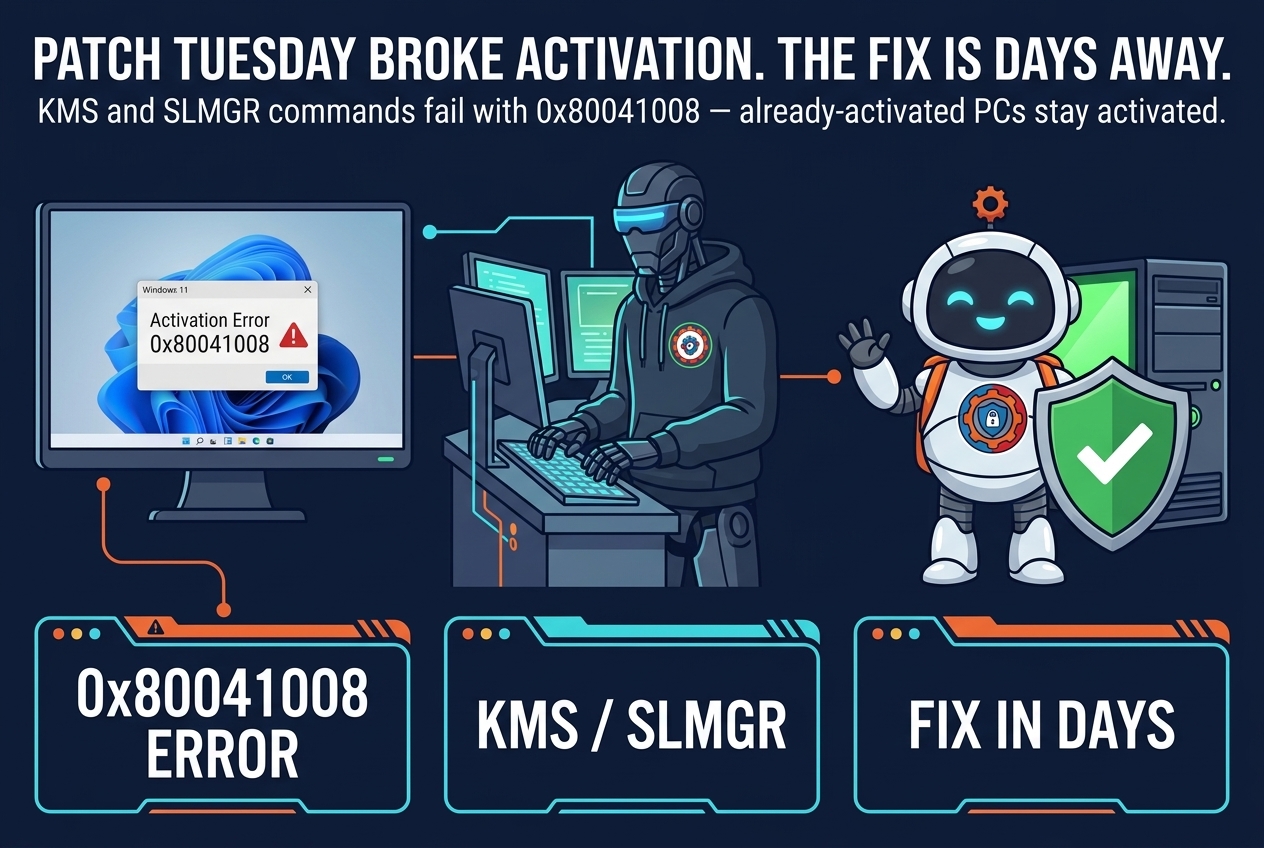
And keep perspective on the week Microsoft is having. The same Patch Tuesday cycle that delivered November’s security updates also broke Windows activation for some users, with a fix still days away. Two separate failures, one week, both inside Microsoft’s own systems.
Microsoft’s worst outage ever, by its own description, was not caused by an attacker. It was caused by the company that runs the service. There is nobody to blame but the vendor — and no fix to install but patience while its servers come back, one batch at a time.
This is a follow-up to our coverage of the outage as it unfolded on November 12. It reflects Microsoft’s status as of its 1:03 AM Pacific update on November 13, 2026. Sources: Windows Latest (Mayank Parmar), Microsoft’s statements, and its Service Health updates.