
















The Query Ended. The Connection Never Closed.
Your query finished hours ago. The connection it opened is still there — and so is the one from the query before it, and the one before that. Microsoft confirmed on Wednesday that Windows updates released since the October 2026 Patch Tuesday are causing SQL Server performance and stability issues, and the cause is almost comically simple: server queries are leaving their connections open after the queries complete. The connections accumulate instead of closing, and server performance degrades over time until something gives.
The bug: a connection that never hangs up
The problem sits in SQL Server linked server queries — the kind that reach out to an external database through an OLE DB provider. A linked server lets SQL Server ask another database a question as if it were one of its own tables. The query runs, the answer comes back, and the job is done. Except the connection to that outside database never closes.
“This issue affects SQL Server linked server queries that use OLE DB providers to connect to external databases. Oracle and PostgreSQL connections are among those known to be affected,” Microsoft explained in its Windows release health dashboard update. In affected environments, administrators might observe an increasing number of open connections to external databases, even when the associated SQL Server linked server queries are no longer running.
That is what makes this one so disorienting to troubleshoot. Nothing is running, yet the connection count keeps climbing — no failed job, no error in the log, just a slow pile-up of connections that were supposed to be temporary. Every linked-server query adds another one, and the server gets a little slower with each.

Who is affected
The scope is broad. Microsoft says the issue impacts both client systems — Windows 10 and Windows 11 — and server systems running Windows Server 2012 and later. Any environment that runs linked server queries against Oracle or PostgreSQL through OLE DB is in the blast radius, and Microsoft’s wording (“among those known to be affected”) leaves the door open to other providers showing up too.
If your SQL Server talks to outside databases this way, the symptom to watch for is a connection count that only goes up. A healthy server’s connections rise and fall with the workload. A server hit by this bug shows a staircase: up after every batch of linked-server queries, never coming back down — fine at the start of the day, sluggish by the afternoon, worse the longer it runs without a restart.
What you can do right now
There is no patch yet, but there are three ways to buy time — and Microsoft is offering a fourth. Administrators can manually close the connections left open by the bug, or restart the SQL Server service to clear them all at once. Both are temporary. Restarting the service also kills any active queries, and neither fix lasts: as soon as linked-server queries run again, the connections start piling up once more.
The better stopgap is the one Microsoft is handing out directly. While it works on the fix, the company says IT administrators can reach out to Microsoft Support for Business for a mitigation that can address the issue until a fix is available. If your SQL Server is already showing the symptoms — climbing connections, degrading performance — that call is worth making before the next restart, not after.

The fix is coming — and November has been a rough month for updates
The permanent fix will arrive as an out-of-band Windows update, released over the next few days. Out-of-band means outside the normal Patch Tuesday cycle — Microsoft is not waiting until December to ship this one. Until it lands, the workarounds above are the plan, and the Support for Business mitigation is the closest thing to a real answer in the meantime.
It is worth noting that this is not the first time this autumn that a Windows update has hurt SQL Server. In September, Microsoft shared a temporary workaround for SQL Server crashes on some Windows Server 2025 systems, tied to recent memory management changes when the Lock Pages in Memory policy is enabled — a bug that could cause crash dumps, services stopping unexpectedly, database maintenance failures, memory corruption, and access violation exceptions. Two different bugs, two different months, the same database caught in the middle.
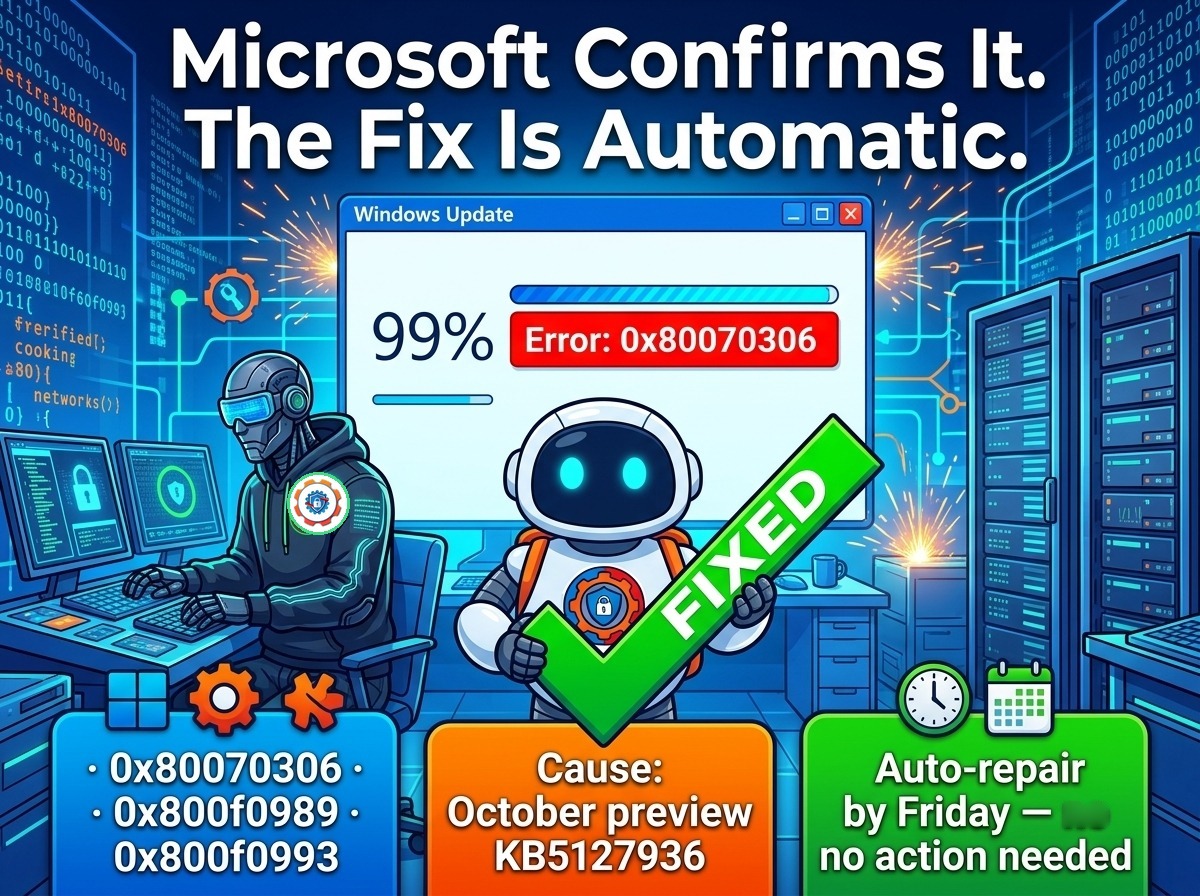
And November’s updates have been rough in more than one way. The same Patch Tuesday cycle that introduced this leak also shipped security updates that fail to install on some Windows 11 systems — a problem Microsoft has now confirmed and is fixing automatically. October’s Patch Tuesday, meanwhile, delivered more than a thousand fixes in a single month, and the fixes themselves are now the thing breaking servers. The pattern is hard to miss: the updates are landing faster and bigger, and the side effects are landing with them.
For SQL Server admins, the takeaway is immediate. Check your linked-server connection counts: if they only climb, you have the bug — close the leftovers, plan a service restart in a maintenance window, and call Microsoft Support for Business for the mitigation. Then watch for the out-of-band update in the next few days and install it when it lands. The query ended hours ago. Make sure its connection does too.