






The Key Was Never Retired. The AI Did the Rest.
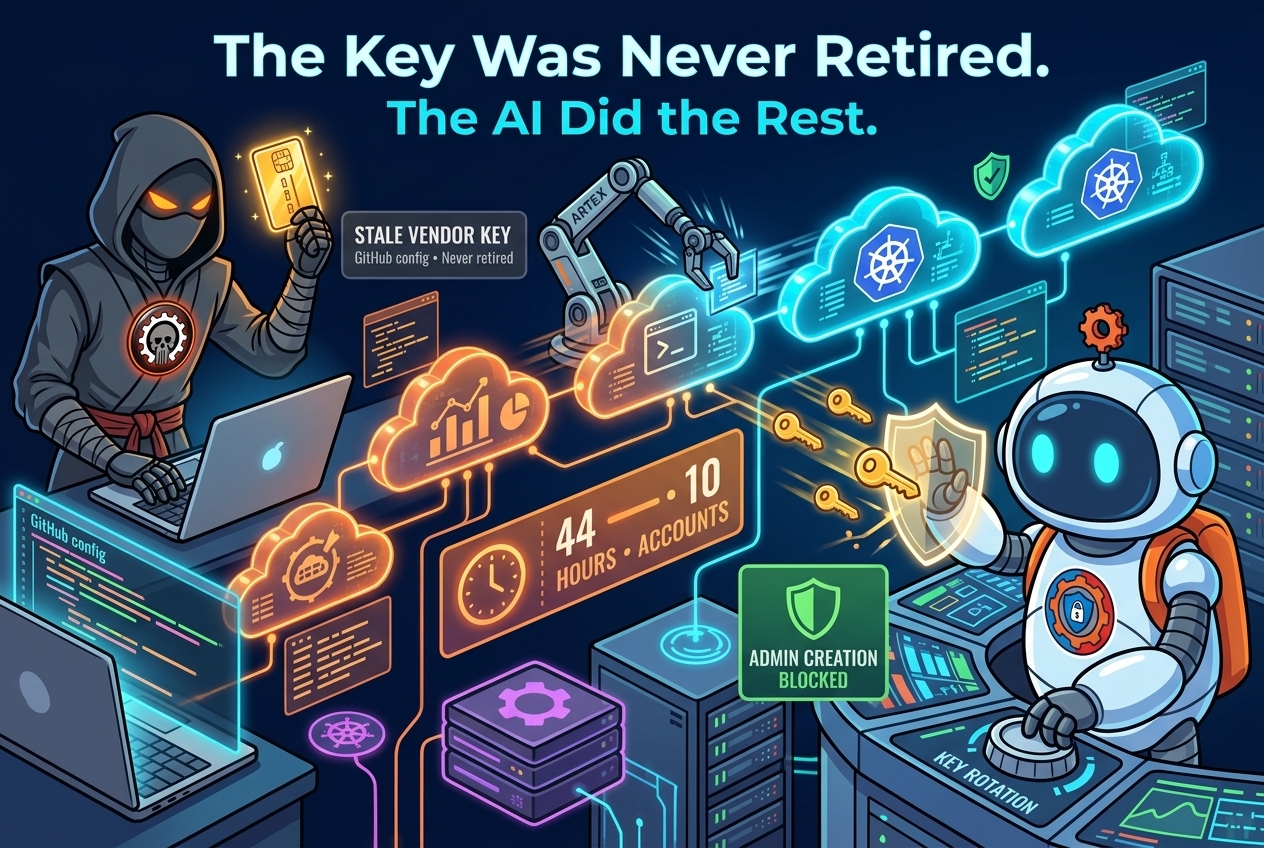
Barracuda knows exactly what went wrong in its own cloud breach. A cloud access key that should have died with a finished vendor project stayed alive in a configuration file in a code repository — and an attacker let an AI framework do the breaking in with it. The intrusion ran for 44 hours across roughly 10 cloud accounts before it was discovered on November 4.
No zero-day was needed. No clever exploit chain had to be invented. The front door was a credential the company itself had handed out and then forgotten to take back. “We did not retire the key when the vendor — a company working in AI — finished that work. That is on us,” Barracuda said in its disclosure. Every organization that has ever handed a vendor a key should read it twice.
What happened
The timeline starts in October, when the attacker stole the key from the unnamed third-party AI vendor. The key was sitting in a configuration file in the vendor’s GitHub repository. Using it, the attacker entered Barracuda’s cloud on November 1 and worked for about 44 hours across roughly 10 accounts.
Once inside, the attacker did what credential thieves always do, only faster: use the credentials found in one system to open the next. The chain ran through Barracuda’s data analytics environment, source-code repositories, and Kubernetes clusters — the platform running its cloud workloads. At each stop, the attacker gathered more credentials and pushed deeper.
The commands the attacker ran give away the motive. They went hunting for cryptocurrency secrets: private keys, Ethereum keystore files, and seed phrases — the recovery phrases that unlock a crypto wallet. Barracuda calls the attack financially motivated, though it does not rule out diversion.
One persistence attempt deployed a container that mounted the host machine’s file system — including credentials stored on it. A separate attempt to create a brand-new cloud administrator identity was blocked. Barracuda says the intrusion carried the fingerprints of ARTEX, the open-source AI penetration-testing framework: machine-style labels, distinctive probing methods, and built-in hunting routines.

Why this one matters
Barracuda is a security company, and that is exactly the point. This breach did not beat a firewall or outsmart an endpoint agent. It walked through a door left open by a process failure — a key lifecycle that ended at “hand it over” and never included “take it back.” Every company has keys like this one.
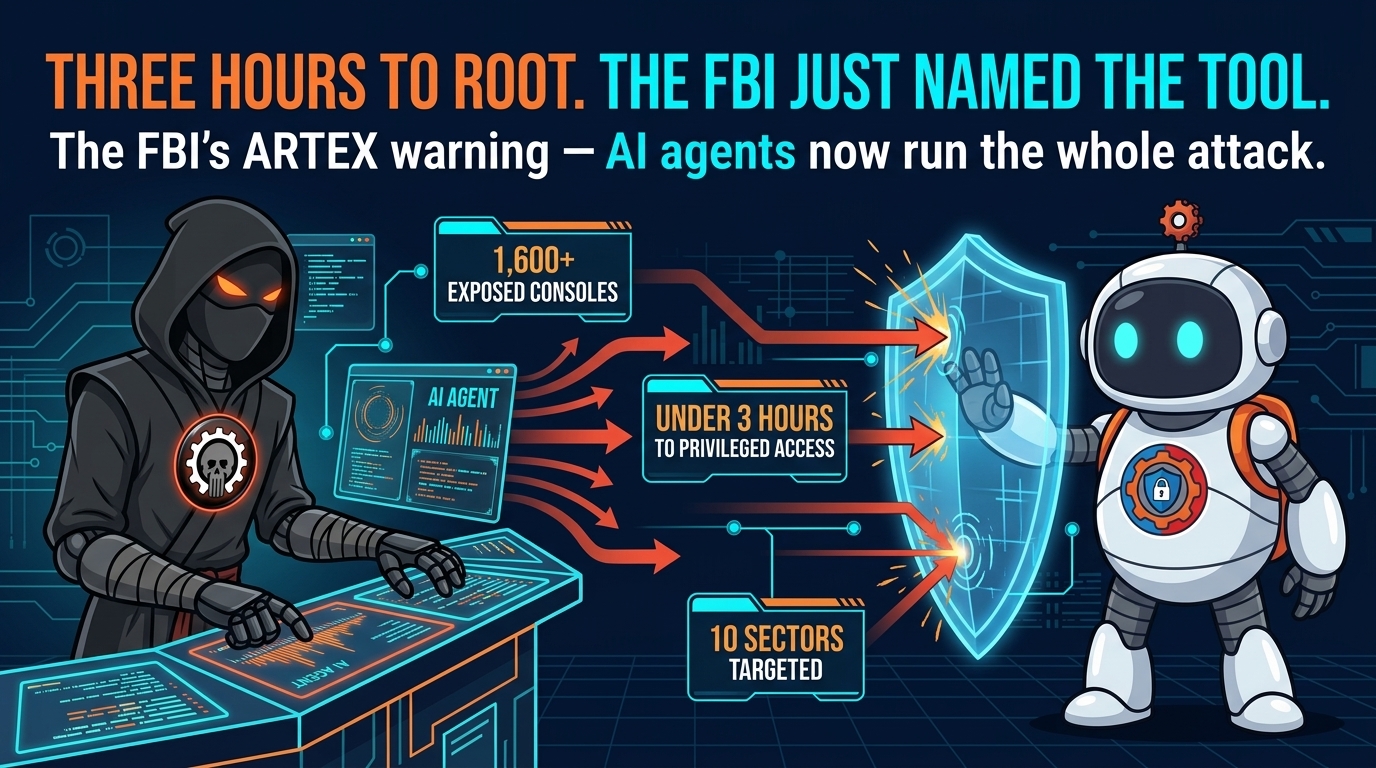
The second lesson is speed. ARTEX is the same AI framework the FBI warned about days ago, after it powered break-ins that went from first probe to privileged access in under three hours. An attacker no longer needs to be skilled, patient, or even awake. They need a working key and a framework that never gets tired.
The third lesson is the pattern. Barracuda notes a strong similarity to the recent breach at cloud hosting provider Railway, which also involved credential chaining and the apparent use of ARTEX — a case where stolen AI credentials turned into a $740,000 bill. Same shape, different company: a credential that should not have existed, an AI tool too fast for manual response, systems that trusted the last login. It is a playbook, and it is being reused.
What to check this week
Four checks, in the order that matters most:
- Inventory every key you have ever given away. List every cloud key issued to vendors, contractors, and partners, with each project’s end date. Retire any key whose project is over — today. Then set an expiry on every key you still need, so a forgotten key dies on its own.
- Scan your code repositories for secrets. The Barracuda key was sitting in a configuration file in a GitHub repo. Scan your public and private repositories, and treat any live credential found there as already compromised: revoke and rotate it. Block commits that contain secrets going forward.
- Watch for machine-speed movement, not just failed logins. ARTEX-style attacks do not look like one person guessing passwords. They look like bursts: rapid probing, one credential used across several systems in minutes. A credential that suddenly touches analytics, code repos, and container clusters in one session is not normal admin work.
- Lock down container persistence and admin creation. Alert on any container mounting a host file system, and on any attempt to create a new cloud admin identity. Barracuda blocked the admin creation; make sure your controls would too, and that the alert reaches a human in minutes.

What Barracuda customers should do
The attacker reached a system that stores customer integration credentials for Barracuda XDR. Barracuda found no evidence those credentials were accessed or stolen — but asked potentially affected Managed XDR Cloud and Monitored Endpoint customers to revoke and recreate their integration credentials. Customers who got no direct communication from Barracuda need take no action.
The Barracuda breach will not be remembered for a novel technique. It will be remembered as the one where a security company said the quiet part out loud: the key was never retired, and that was on them. The fix is not a new product. It is a list, a calendar reminder, and the discipline to collect every vendor key the day the guest leaves.