














GL.iNet’s Cloud Flaw Let Hackers In. Your Router Never Saw Them Coming.
On November 20, 2026, GL.iNet confirmed the nightmare scenario: hackers had exploited a vulnerability in its GoodCloud remote management service, reached customer devices through it, and installed custom malware on some GL.iNet routers and KVM devices. The company says the attack path is now blocked and the cloud vulnerability is fixed — but that fix does not clean a single device that is already infected.
GL.iNet’s own words were blunt: “The attack path has been blocked. We fixed the cloud vulnerability and blocked the access used in this incident.” Devices can no longer be newly infected through this path. How the attackers got into the cloud platform, how many customers were affected, and whether any information was stolen — all still unanswered.
Malware built for the hardware it haunts
This was not off-the-shelf malware dropped onto the wrong box. The payloads were custom-built for GL.iNet hardware — hard to notice, harder to remove. The malware disguises itself as a system process, crond -i /tmp/.log — that running process is the clearest indicator of compromise GL.iNet has shared. It persists via startup scripts and scheduled tasks, surviving reboots, replaces the legitimate netstat utility with a modified script that hides connections to 66.245.219.252, installs SSH public keys so the attackers can walk back in, alters file timestamps, and periodically contacts a remote server to retrieve and execute commands.
Root-level reverse shells went to 170.39.226.219 via the Linux nc utility, and the malware downloaded executables named gl-helper and gb. The ni.sh installer carries Chinese-language developer comments — BleepingComputer notes this as indicating a Chinese-speaking individual may have written it, a clue about the author, not confirmed attribution.

How widespread is it?
RemoteToHome Consulting analyzed 183 routers it owns or manages and found suspicious activity on 152: 24 had root-level reverse shells, 47 carried an older persistent backdoor, and 81 showed evidence that attacker-supplied commands had executed. Two caveats: the findings may not represent GL.iNet’s wider customer base, and the older backdoor infections may not be linked to the November attacks.
Some recovered malicious files were timestamped December 2025, suggesting some devices may have been compromised for months — though whether the same actors are involved is unclear.
The KVM angle is the scary part
Routers are bad enough. KVMs raise the stakes sharply: a KVM sits between an administrator and the computers behind it, with keyboard, video, and mouse access to whatever is plugged in. One owner of a GL-RM1 KVM reported that the device downloaded the malicious ni.sh script and payloads from 66.245.219.252 on November 19, then began contacting roughly 1,800 residential IP addresses a day, along with the TRON blockchain API. The purpose of that traffic is unclear, with no confirmation of residential-proxy or botnet use.
RemoteToHome also reported a potential command-injection flaw in the GoodCloud client — its AstroWarp/SD-WAN handler passing cloud-supplied values into root shell commands without validation. GL.iNet has not confirmed it was used in the attacks.
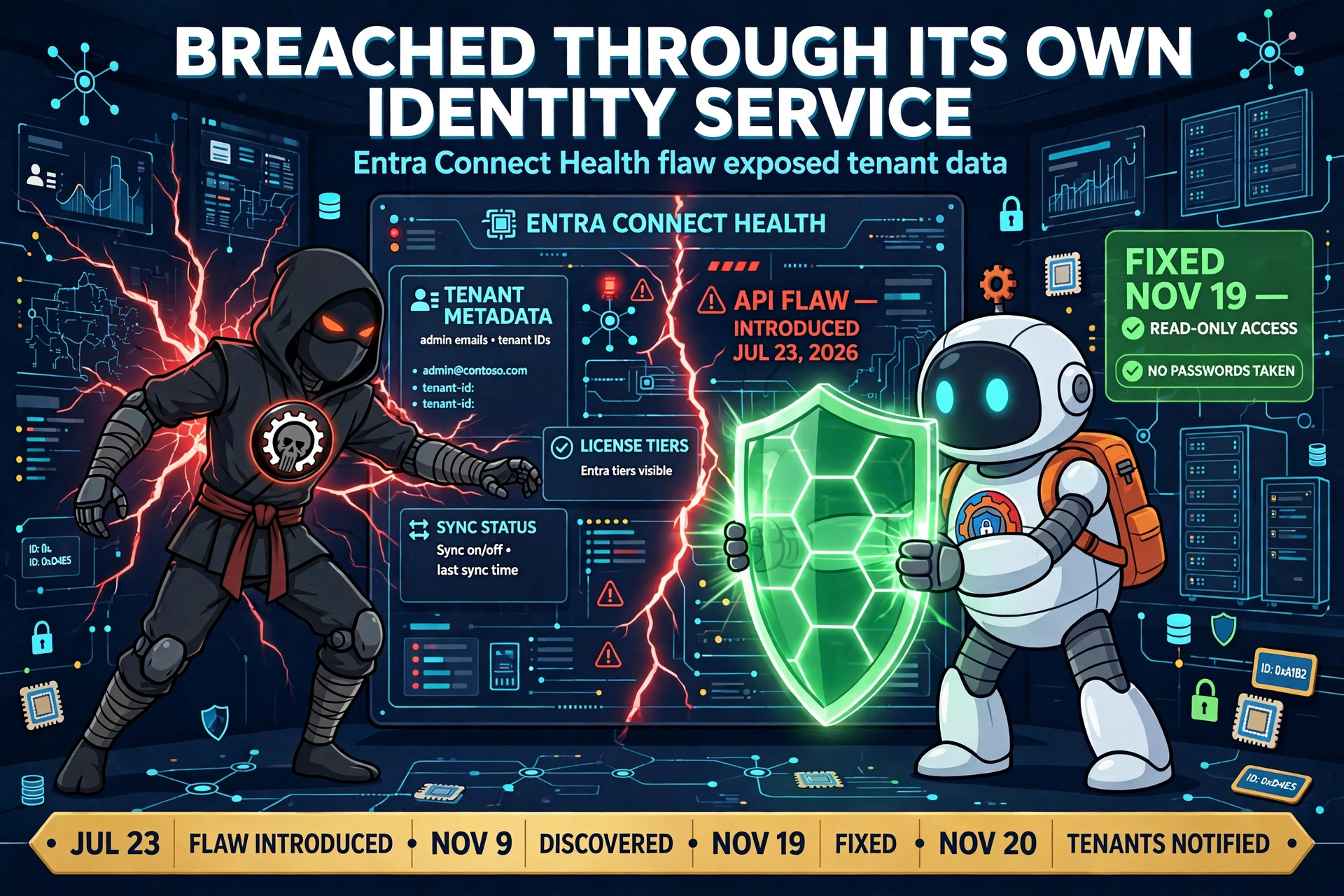
This is a failure class we have seen before: a vendor’s own cloud service becoming the attack path into customer hardware. When Microsoft’s own identity service was the way in, the lesson was identical — trust in the management plane is trust in every device it touches. Hardware arriving already compromised is not new either: 1.3 million Android TV boxes were found backdoored at scale.
What to do right now
Stable firmware with security fixes lands today, November 22, 2026. For KVM devices: 1.10.3 or later for the RM10, RM1, RM1V2, RM1PE, and RM4PE; 1.10.3 beta or later for the RM10RC; 1.8.7 or later for the RMQ1. Four checks matter:
- Check for the tell-tale process. Look for a running process named
crond -i /tmp/.logon your GL.iNet devices. GL.iNet also links a community-developed detection and cleanup tool in its support instructions: it checks known malware files, suspicious processes, modified utilities, and config files changed for persistence, and can collect evidence and optionally remove known malware — but it cannot detect every infection. - Install the November 22 firmware. Update every router and KVM device to the stable release as soon as it is available for your model. The update closes the door — it does not evict anyone already inside.
- If a device is infected, reset it properly. A compromised device may need a firmware reinstall without retaining settings — malicious files can live in config directories and survive an ordinary upgrade. Never restore a potentially infected configuration onto a clean device, and preserve evidence before resetting.
- Rotate what may have been exposed — and check what sits behind the KVM. Change credentials and keys that may have been exposed, and examine any computer connected to an infected KVM — GL.iNet has not ruled out compromise spreading that way, and says it will notify identified affected customers by email.

The cloud dashboard meant to make managing routers easier became the way in. One flaw in GoodCloud reached into homes, offices, and server rooms — and into KVMs that touch the computers behind them. Patch today, check for the crond process tonight, and if you find it, assume the device is compromised until you have rebuilt it clean.