




LaLiga Was Breached. The Club Data Is the Real Story.
Spain’s top football league has a data problem — and it is bigger than the fans.
On Monday, November 23, 2026, LaLiga revealed that attackers had broken into a fan-facing platform and extracted personal data. The attack ran from November 14 to 16, and the data taken did not stop at supporters: information belonging to clubs was taken too. The full extent of what was extracted is still undetermined.
LaLiga says it became aware of the intrusion on November 16, when its security teams spotted suspicious activity on the platform. The attacker was blocked, and further data extraction was prevented. The league stressed that its wider IT systems and its football competitions were not affected — the breach was restricted to the affected platform.
The incident has been reported to the Spanish Agency for the Protection of Data (AEPD) and to the National Police’s Central Unit of Cyber-Delinquency.
What the attackers took
According to researchers at Cybernews, the stolen data could include fans’ full names, email addresses and loyalty program information — and possibly password hashes. That last detail matters: a password hash is a scrambled version of a password, and if attackers crack it, the real password falls with it. LaLiga has not said how many people are affected, and the full scope of the theft is still being established.
That uncertainty is the first problem. The second is what comes next.

The scam that knows your team
Stolen fan data rarely ends with the theft. It gets reused — and the reuse is usually a message that feels personal. Fans should expect phishing lures built around the breach, including messages promising “new unlocked rewards” for their loyalty accounts.
The danger is the personalization. A Huntress security advisor, Muhammad Yahya Patel, has warned that fraudsters use breach data to tailor their approach: when a message correctly names your team, your account or your location, it feels legitimate. That precision is exactly what should make you suspicious, not reassured. A scammer who knows your club is not a friend of the club — they are a criminal holding its stolen records.
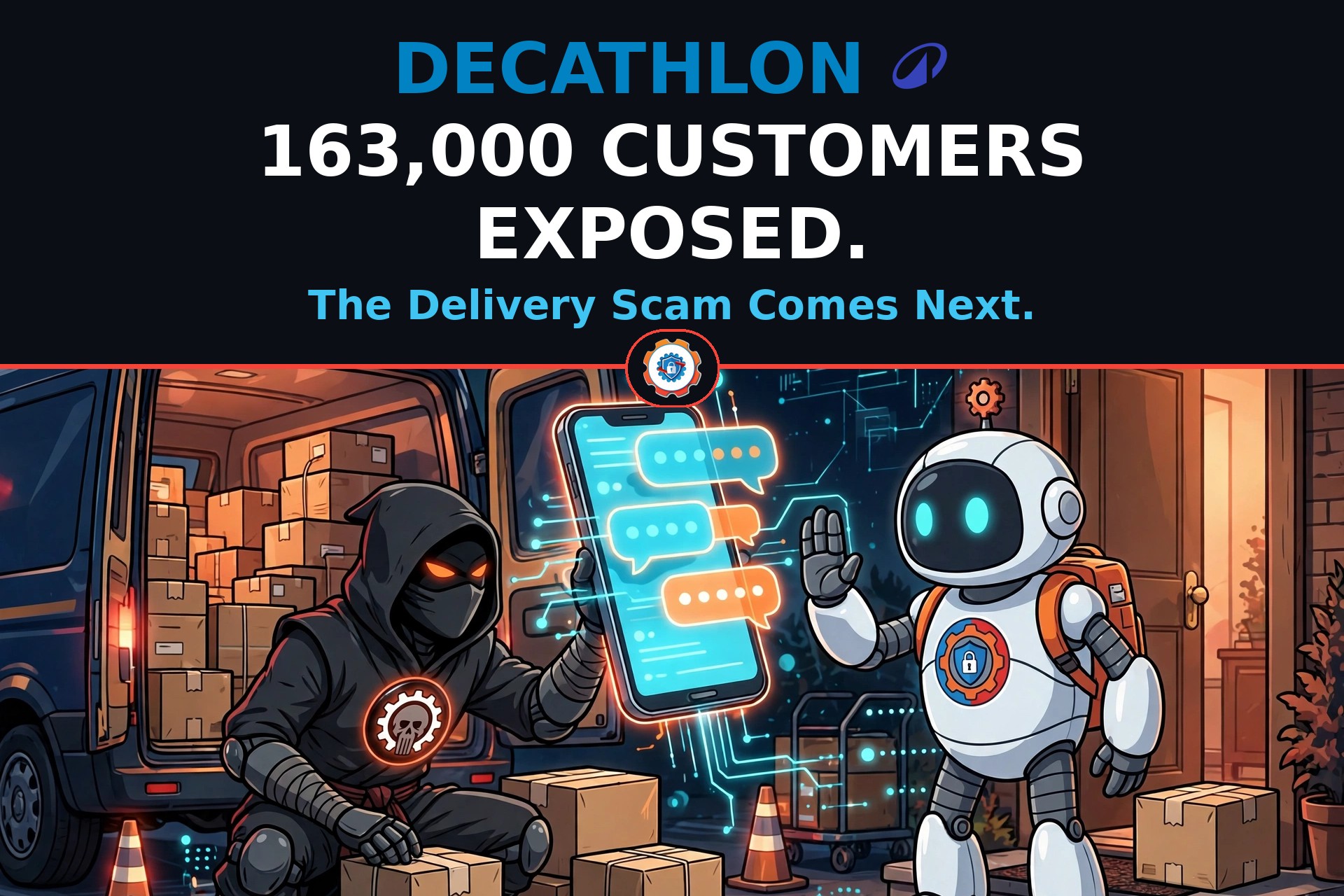
We have seen this pattern before: a breach exposes customer data, and the delivery scam — or in this case, the rewards scam — follows within days. When Decathlon lost 163,000 customer records days earlier, the same playbook unfolded, with fraudsters turning stolen order details into convincing delivery messages. The LaLiga theft hands attackers an even richer script, because fandom is personal in a way a shopping order is not.
The club data is the real story
The fan data will drive the headlines. The club data may drive the damage.
Professional football sits at the intersection of several things attackers love: global fan bases handing over personal data, substantial financial transactions, commercially sensitive transfer and contract information, and brand recognition that makes stolen data easy to exploit for follow-on fraud. Club data caught in a breach like this could include commercial negotiations, player contracts, scouting intelligence and financial arrangements — material with real value to competitors, agents and the media.
Patel’s assessment is blunt: the consequences of this breach extend well beyond a standard personal data breach into genuinely sensitive commercial territory. A leaked transfer negotiation or a contract detail is not just embarrassing; it changes bargaining positions, and it can be sold, traded or used as leverage. And Patel maintains that the sports sector has consistently underinvested in cybersecurity relative to the value of what it holds — a league that guards its broadcast rights fiercely has, by this reading, guarded its data far less so.
That is the uncomfortable part of this story. LaLiga contained the attack in three days and reported it to the right authorities. But containment is not the same as safety, and the data that left the building does not come back.

What to check if you are a LaLiga fan
If you hold a LaLiga account, a club membership or a fan loyalty account, do these four things now — before the phishing wave arrives, not after it:
- Change your LaLiga or fan-platform password. Do it today, and make sure the new password is not reused on any other service. If password hashes were among the stolen data, a reused password is the fastest way in — and the recent two-billion-record exposure showed what happens when passwords are stored without real protection.
- Watch for phishing that references your club or account. Any message that mentions your team, your loyalty points or your account details by name should be treated as suspect until proven otherwise — especially one arriving by email or text in the coming weeks.
- Enable multi-factor authentication (MFA) where it is offered. MFA is the extra code at sign-in, and it stops a stolen password from being enough on its own.
- Treat “unlocked rewards” messages as suspect. A surprise reward, a new perk or a free upgrade arriving out of nowhere is a classic lure after a loyalty-data breach. Go to the official app or site yourself instead of clicking the link in the message.
The breach is contained. The risk is not — and for fans, the next move belongs to the attackers. The best defence now is the unglamorous kind: a fresh password, MFA switched on, and a healthy suspicion of any message that knows a little too much about you.