
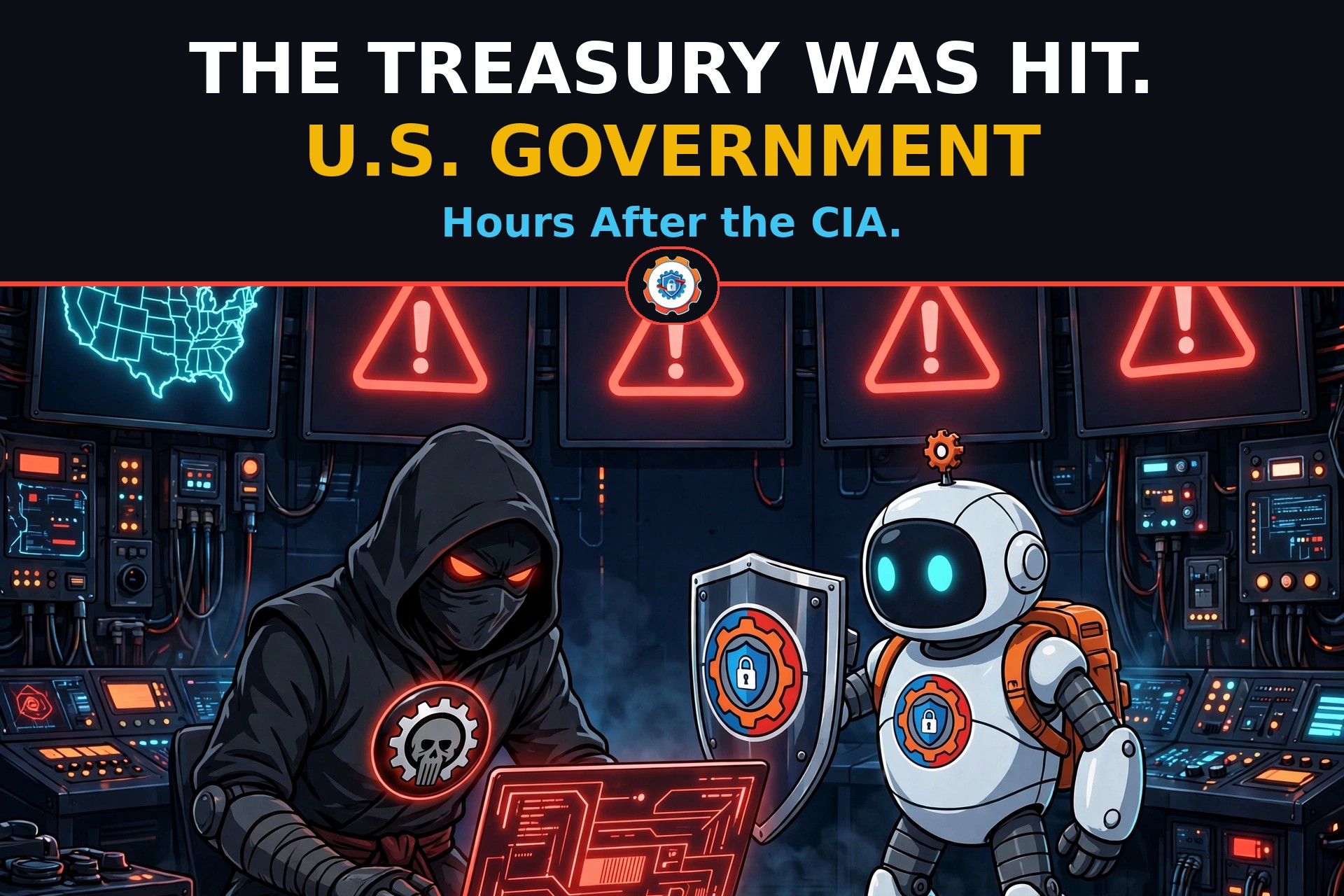






The Treasury Was Hit. Hours After the CIA.
The U.S. Treasury Department has been hit by a cyberattack — hours after news broke that the CIA’s own systems had been breached. It is the latest in a wave sweeping across the federal government: the FBI, the CIA, the Treasury, and the Department of Agriculture have all been hit in the space of about a week.
What is striking is not just the count. Each breach touches a different kind of sensitive data — law-enforcement records, intelligence analysis, financial-crime filings, and the systems that pay farmers. Whoever is behind this is not picking one target.
The Treasury breach: what we know
The Department of the Treasury confirmed that hackers gained unauthorized access to a limited subset of its systems, including systems belonging to the Financial Crimes Enforcement Network — FinCEN. Some FinCEN systems were taken offline as a precaution while investigators work through what happened.
FinCEN safeguards some of the most sensitive financial records in the country: suspicious activity reports filed by banks, and the transaction records behind anti-money-laundering enforcement.
The official word so far offers some reassurance. Treasury says there is no evidence that the Bank Secrecy Act database or the beneficial-ownership database was breached, and the electronic filing system for those reports — BSA e-filings — was not affected. Filing deadlines have been extended to December 30.
The investigation is now in the hands of the Treasury, working with the FBI, CISA, and third-party forensic examiners. The fact that the FBI is both a responder here and a victim in the same wave tells its own story.
The CIA breach came first — by hours
Just hours before the Treasury disclosure, reports emerged that the CIA and the Office of the Director of National Intelligence had suffered unauthorized access to an open-source analysis system — the OSINT platform used to sift public and commercial data. Sources familiar with the incident told CNN about the access; officials are confident no classified information was reached.

The FBI was already a victim
The wave started with the FBI. Last week, attackers breached a warrant and background-check database — the National Crime Information Center (NCIC) system shared by local and federal law enforcement — and exposed it. We covered that breach when it broke: the FBI’s crime database was breached, and nobody knows what was taken. With the CIA and Treasury now hit too, it looks like the opening move of something bigger.
And then the USDA went down
The Department of Agriculture is dealing with an outage in the essential services used to pay farmers — and sources told NBC it was caused by a cyberattack.
Add the wider outages — Microsoft services, the FAA, and 911 emergency systems — and the picture is of a government under sustained pressure on many fronts. Secretary of State Marco Rubio said last week there was “zero evidence” of a cyberattack behind the outages, and has not addressed the question since. The Treasury and CIA disclosures have now answered it for him.
What is NOT confirmed: the China claim
Amid the confusion, one claim is circulating widely and needs care. Gen. Michael Flynn has claimed that a tool called ARTEX was used in the attacks and that it points to China. No affected government entity has confirmed that claim. Until one does, it is an allegation, not a fact.
Attribution is the hardest problem in cybersecurity, and governments name attackers only after the evidence is in hand. France did exactly that earlier this month when it publicly named the attackers behind the supermarket arson campaign — 700 stores, 15 fires, and a named culprit — but only after investigators had built the case. The U.S. agencies have not reached that point yet.

Why this matters
Three things make this wave different from an ordinary bad week. First, the breadth: four agencies with four different missions, hit in days — a shared vulnerability, a shared supply chain, or an attacker with the resources to run parallel campaigns. Second, the data: FinCEN’s suspicious activity reports, the FBI’s warrant database, and the CIA’s picture of what it watches are not records that get quietly reissued. Once seen, they cannot be unseen. Third, the timing: these incidents landed alongside outages in services the public depends on, against official statements that played the cyberattack angle down. When the facts outrun the official line, trust erodes faster than systems get patched.
What to check today
1. If you file with FinCEN, check the new deadline. BSA filing deadlines have been extended to December 30. Confirm your filings went through the unaffected e-filing system.
2. Treat every claim about who did this as unproven. The ARTEX and China claims are unconfirmed by any government entity. Do not repeat attribution as fact.
3. Assume the wave is not over. Four agencies in a week is a pattern, not a coincidence. If you run systems that touch federal data, review access logs and patch now, not after the next disclosure.
4. Watch the official channels, not the rumor mill. Treasury, CISA, and the FBI are the sources that will confirm what was taken and what to do about it. Check the next disclosure against the facts above before drawing conclusions.
The Treasury breach is the story of the day. The story of the week is the spree itself — and nobody in government is yet saying it has stopped.