


The $600 Interview Was Fake. Your Google Login Was the Prize.
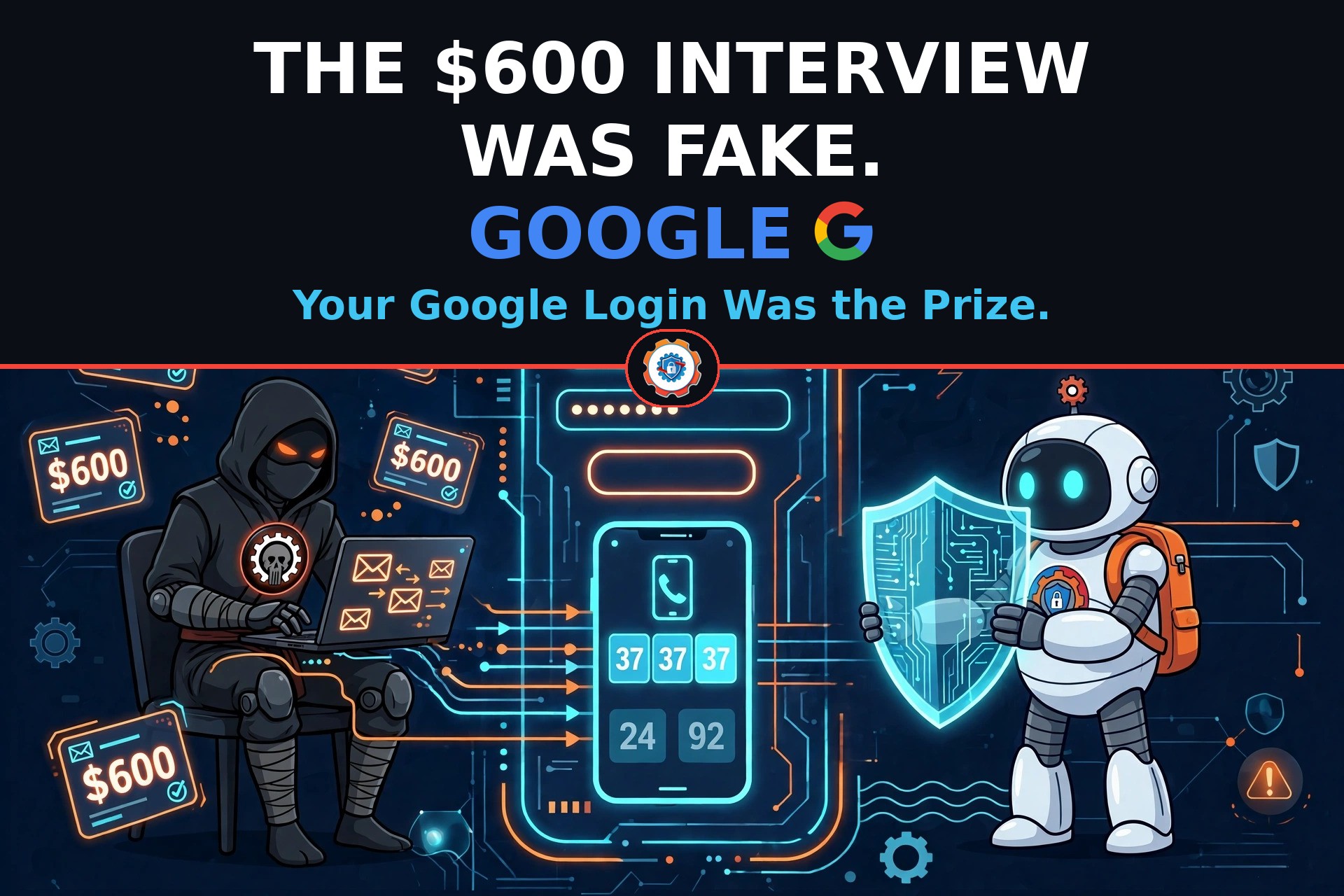
It starts with the kind of email most people would love to get: a well-known company wants your expert opinion — 45 minutes, $600 for the trouble, just sign in with your work Google account. The money is fake. The interview is fake. The sign-in page is fake. And by the time you have typed your password and tapped the number on your phone, the attackers have what they need to walk into your company’s Google and Okta accounts as you.
That is “GoodGuys”, documented by Push Security, which has tracked it since October 13. The attackers impersonate eight major brands — Accenture, American Express, Coca-Cola, Culver’s, Google Cloud, Nvidia, SpaceX and Spotify — in fake invitations to paid expert interviews and webinars.
The bait: $600 for 45 minutes
The hook flatters: $600 for less than an hour of your opinion, and most people click before they think. The invitations arrive through legitimate platforms the attackers abuse — HireVue, SendGrid, Mandrill and Cvent — so they sail past spam filters that would stop a random domain.
The links lead to domains built around interviews, webinars and research studies, each dressed in the brand it impersonates: accenture[.]international-interviews[.]com, nvidia[.]feedback-study[.]com, google[.]webinar-cloud[.]com, spotify[.]interview-experts[.]com. Clicking one brings a CAPTCHA first — a small touch of legitimacy — then a website wearing the company’s branding. Nvidia’s page offers $500 for an AI feedback study; Accenture’s offers $600 for an expert interview. In one documented case, the lure was a HireVue-sent invitation to a Google Cloud webinar on deploying AI apps into production.

The trap: a sign-in that relays you in real time
Every lure ends the same way: a fake Google sign-in asking the visitor to log in to validate the invitation. The kit is picky — it targets corporate accounts only and rejects Gmail, Yahoo and Outlook addresses. The attackers are not after your personal inbox — they want the work account, the one that opens the company’s Google Workspace and single sign-on.
What makes GoodGuys dangerous is what happens after the password. The page can serve up whatever multi-factor challenge the real Google or Okta would show next: a texted code, an authenticator code, or Google’s number-matching prompt. The kit also has fake Okta forms and support for Okta Verify push notifications. Push Security believes the attackers log in manually with each stolen credential, telling the page to display whatever challenge appears — a human relaying the victim’s own authentication back in real time.
That is not how most phishing kits work: the usual adversary-in-the-middle kit relays the legitimate login page through a reverse proxy. GoodGuys uses fake forms on an attacker-controlled server — and still walks straight through MFA. Once the process is complete, the victim is redirected elsewhere or thanked for their application. Nothing looks wrong. The interview never existed, and the login is already gone.
The technique is familiar: similar methods powered the vishing-based theft of corporate single sign-on credentials linked to the ShinyHunters extortion gang earlier this year — the call that came from “IT” and took the cloud with it. Fake-job lures are a crowded field — a separate campaign impersonating around 50 AI and blockchain brands turned phony job offers into clipboard malware — the job was fake, and the clipboard was loaded.
The tell: the kit may have been built by AI
Every build of the kit carries a strange fingerprint. Hidden in the sign-in card’s accessibility text — words only a screen reader announces — are two labels: “Sign-in simulation” and “GoodGuys sign-in simulation”. A visitor never sees them. Push Security’s reading: calling the page a sign-in “simulation” for a made-up company is the kind of framing someone uses to talk an AI coding assistant past its guardrails when asking it to build a phishing page — and the label stayed in every build they collected. The campaign’s name comes from that leftover.
A possibly related campaign uses fake Coca-Cola interview invitations plus the Evilginx kit to target Google Ads accounts. Both used the same abused SendGrid click tracker and identical Coca-Cola branding, but differences in code and infrastructure stopped short of conclusively linking the two. One group or two, the lure is the same: a famous brand, a paid interview, and a sign-in page at the end.

What to do
1. Treat a paid-interview invitation as phishing until proven otherwise. Real expert-interview programs exist, but they do not arrive out of the blue asking you to sign in to claim $600. If the offer sounds too good, assume it is a lure.
2. Never sign in from a link in an email. If a webinar or interview is real, navigate to the company’s own site yourself. A sign-in page reached through an emailed link is the attacker’s page until proven otherwise.
3. Verify the invite through the company’s own channels. A quick check on the company’s real website takes a minute — and the attackers are counting on you not spending it.
4. Move to phishing-resistant MFA. Codes and number-matching prompts can be relayed by a kit like this one. Passkeys and hardware security keys cannot — there is nothing to intercept and replay. If your organization offers them, turn them on.
The $600 was never real. The only thing the interview pays out is your login.