








SAP Was Breached on GitHub. Its Source Code Was Copied — and Changed.
SAP has confirmed a security incident in its own IT environment — and the part that should make every technology team sit up is not what was stolen. It is what was changed.
The German software giant told BleepingComputer it detected suspicious activity and took urgent action to protect customers. So far, the evidence shows no downstream compromise of customer systems or data. That is the good news. Everything else is still a blank space — and the blanks are where the risk lives.
What happened
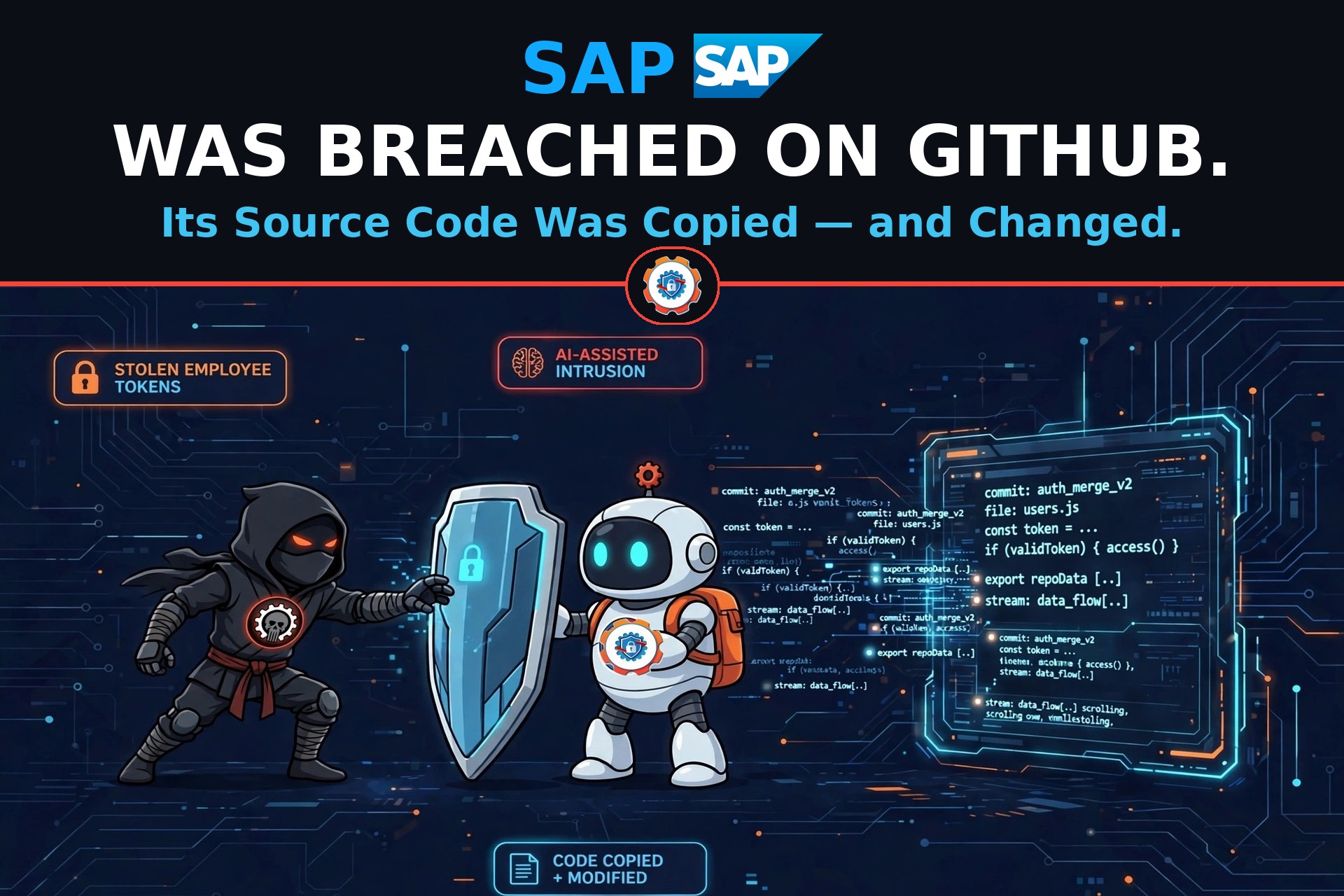
According to Der Spiegel, which cited an internal SAP memo, the attack is being tracked inside the company under the name “Project Granite.” Employees were asked to keep the details confidential. Insider sources told the same outlet that attackers broke into SAP’s GitHub environment — possibly with the help of AI tools — stole employee authentication tokens, and then copied and modified SAP source code on GitHub.
Copying source code is espionage: the attacker learns how the software works. Modifying it is something else entirely — changed code can be shipped inside an update, or left in a repository where a customer downloads it believing it is the real thing.
SAP has not said which environments were affected, or whether customers who download code from its GitHub repositories — or receive updates fed by those repositories — should take any action. A spokesperson declined to share further information. So the most important questions have no answers: which repositories, which code, and which customers.

Why the scale of SAP makes this different
SAP is not a niche vendor. Based in Walldorf, Germany, it employs around 110,000 people, operates in 157 countries, serves roughly 300 million subscribers, and brings in more than $40 billion in annual revenue. Its software runs the finances, supply chains, and human resources of some of the largest organizations on the planet — so when code at that scale is copied and modified, the blast radius is every company downstream that trusts SAP code.
We have seen trusted sources turn hostile before. Earlier this year, the official downloads of Q-Dir and DesktopOK were trojanized at the source, delivering a remote access tool to users who did everything right. And 7,600 GitHub repositories were poisoned in a campaign that hid its server inside a crypto wallet. The lesson is the same: when the source you trust is the thing that was touched, your normal defenses never get a chance to fire.
The AI angle is real — and so is the uncertainty
The timing adds another layer. Germany’s BSI warned just yesterday about agentic AI tools — naming ARTEX, CAIRN, and PentAGI — and Switzerland and Italy have reported the first large-scale AI-driven attacks on critical infrastructure. Against that backdrop, the claim that AI may have played a role here lands differently than it would have a year ago.
Keep the qualifier: the sources said possibly. Nobody has confirmed AI did the breaking in, or shown how. What is confirmed is that attackers got in, took employee tokens, and reached the code.

What to do now
Let’s be plain: SAP has not told customers to take any action. Nothing below is SAP guidance. These are four sensible, general checks for any organization that consumes SAP code from GitHub or receives updates that pass through SAP’s repositories — hygiene that costs little and closes the obvious doors while we wait for SAP to say more.
1. Verify the integrity of what you pull. If your teams clone SAP repositories or build from SAP code on GitHub, check hashes and signatures against known-good copies. A file that changed without a matching public commit is a red flag, not a curiosity.
2. Watch for anomalies in repos and updates. Unexpected commits, odd release timing, or updates that behave differently from the version before them are worth investigating immediately.
3. Rotate any token that touched SAP’s GitHub environment. Employee authentication tokens were stolen in this attack. If your organization holds tokens or credentials that interact with SAP repositories, replace them. Treat anything that may have been exposed as exposed.
4. Watch for SAP’s follow-up — and act on it fast. SAP will have to answer the open questions: which repositories were touched, which code changed, and what customers should do. Subscribe to SAP’s security advisories now, and make sure the alerts reach the people who can act on them — not just an inbox nobody reads.
What to watch next
The incident is confirmed, the customer impact so far is zero, and the code question is open. That is why this story deserves attention rather than panic: nothing has gone wrong downstream yet, but modified code flowing out through a trusted channel is precisely what the attackers are reported to have done.
The next facts that matter are all in SAP’s hands: which environments were hit, which repositories were modified, and what customers should do. Until SAP answers, the right move is verification, not assumption — check what you pull, watch what changes, rotate what may be exposed, and watch for the guidance that has to come.