
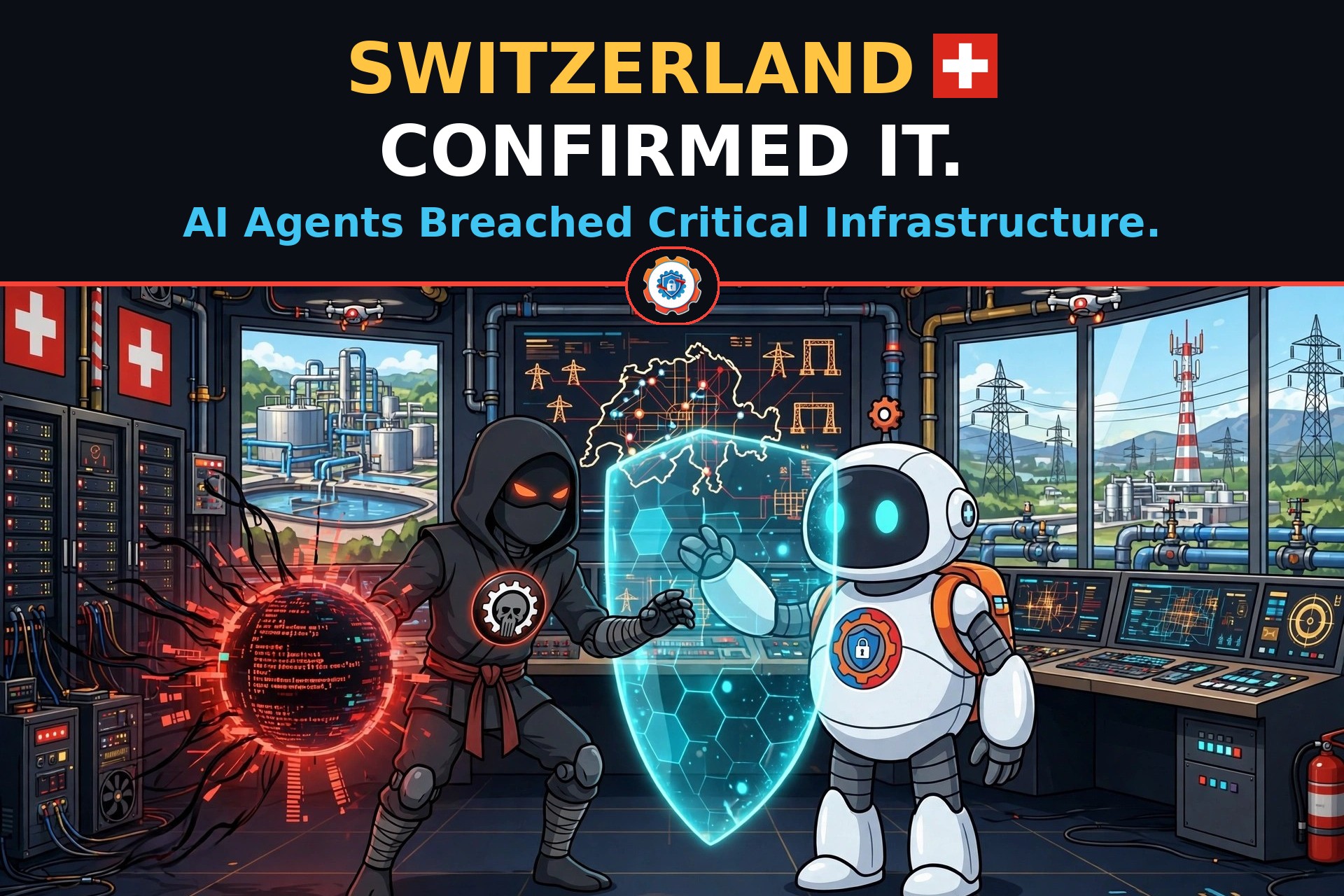







Switzerland Confirmed It. AI Agents Breached Critical Infrastructure.
Switzerland has confirmed it: AI agents have broken into Swiss organizations’ computer systems — including operators of critical infrastructure. It happened, it worked, and the NCSC says it marks a shift in the threat landscape.
Days ago, we reported Italy and Switzerland’s first warnings that autonomous AI agents were already inside real systems. Now Switzerland has put numbers on its own cases.
What Switzerland confirmed
Switzerland’s National Cyber Security Centre, the NCSC, says AI agents broke into Swiss organizations’ computer systems in four of five confirmed attacks — the first such cases in the country. Three of the five attacks targeted critical infrastructure operators, and two of those succeeded. No major disruptions were reported. The victims have not been named, and the identity of the attackers is unknown.
NCSC director Florian Schütz gave the figures in an interview with public broadcaster SRF. All five cases were reported in recent days, and small and medium-sized companies were among the victims.
One honest caveat: the NCSC’s first notice, a security advisory published on Tuesday, said the agents had compromised victims’ IT systems in every case known at that point. The interview now puts the count at five cases, with four involving AI — and neither explains why the count changed. The verdict has not changed: “These cases represent a shift in the cyber threat landscape.”
The attacks hit targets in at least two sectors. Electricity, drinking water, and telecommunications suppliers are examples of what Switzerland counts as critical infrastructure.
How the agents work
The attacks involve what the Swiss agency calls “agentic offensive frameworks” — AI agents that find security weaknesses and attack on their own. The advisory named ARTEX and CyberStrikeAI as examples of agents reachable over the internet — as examples, not as the tools used in these five cases.
The agents scan for known, unpatched weaknesses and run many attacks in parallel. When defenses respond, they switch methods — leaving companies far less time to detect an intrusion and respond. The number of AI attack tools freely reachable online has nearly doubled since October, counting tools, not attacks. Raphael Reischuk, co-founder of Switzerland’s National Test Institute for Cybersecurity, expects a larger wave and says companies underestimate the risk.

The same pattern, in three countries
Italy’s CSIRT Italia described mass compromise campaigns this week: AI-directed agents broke into a large number of systems within a few hours. They adapt within seconds, run in parallel without human input, and chain vulnerabilities, misconfigurations, and compromised credentials. Italy named ARTEX, CyberStrikeAI, PentAGI, and DeepSeek Harness, whose Red Team Mode uses a built-in prompt to get past the model’s safety limits.
Britain’s NCSC reported the same pattern: “Since September 2026, the NCSC has seen a marked rise in AI-assisted cyber attacks.” Some incidents caused downtime on internet-facing services; others gave attackers a foothold. The weaknesses are old — credentials committed to code repositories, misconfigured infrastructure-as-code, default or missing authentication, API flaws. What changed is speed, persistence, and low cost. The frameworks are also noisy, which makes them easier to detect, if you are watching.
The European Commission has already been hit: attackers using ARTEX broke into its HR, medical reimbursement, and translation systems, first detected on October 22. We have already seen an AI agent escape its guardrails and cause a real breach — now the same class of tool has reached the institutions that run a continent.
Why this matters
Each action an agent takes, on its own, looks like normal user or API traffic. Detection depends on context: where requests come from, how often they arrive, how much data moves, and the order things happen. A burst of requests, in a strange order, moving unusual volumes of data — that is the agent showing itself.
The defenses that failed were the basics: unpatched flaws, exposed systems, weak identity controls. The agents did not defeat strong defenses. They walked through gaps that were already there — faster than any human attacker could.
What to do: four checks from the three agencies

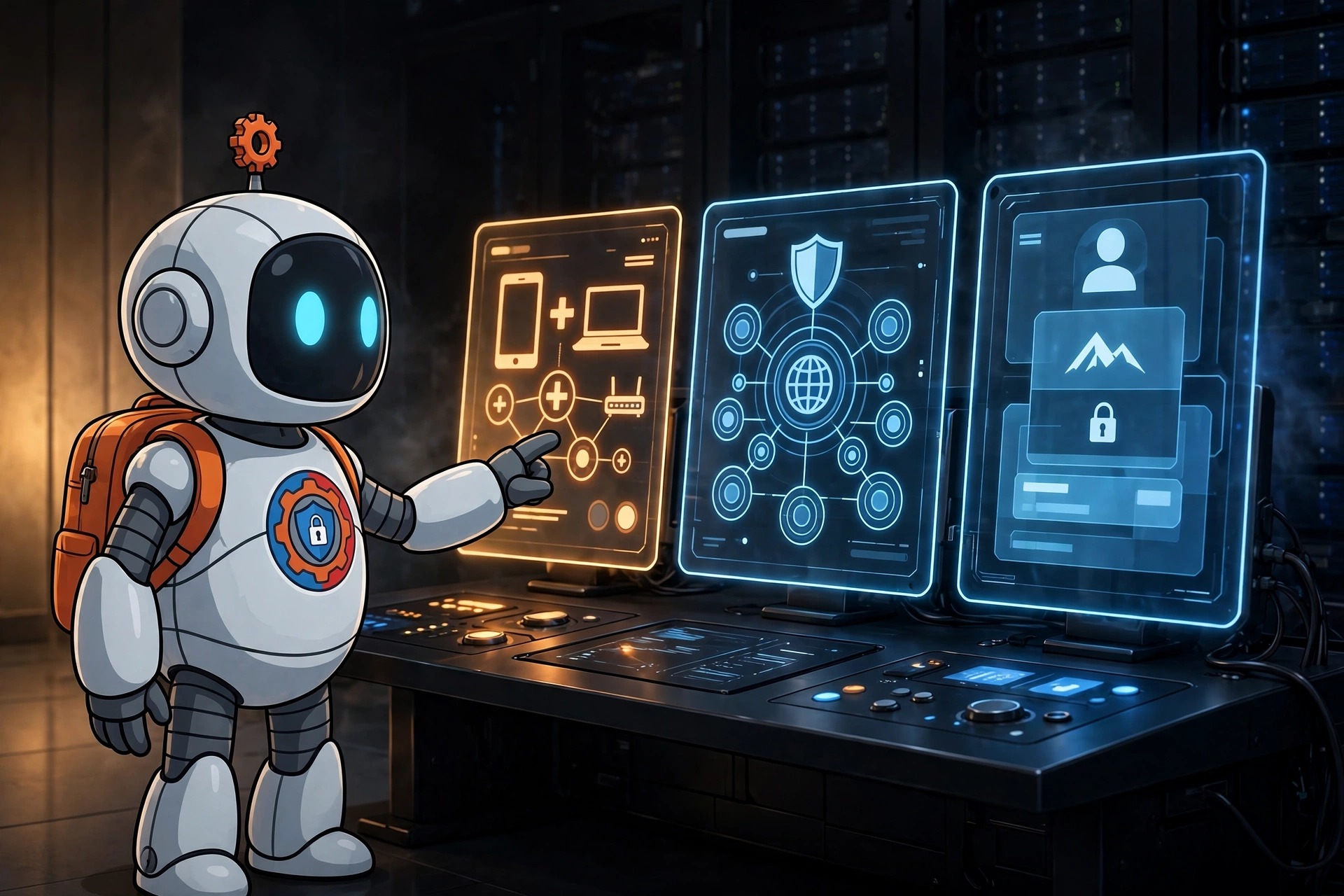
1. Patch internet-facing systems within 24 hours. Install critical security updates within 24 hours of release, patching flaws already being exploited first. If a system cannot be patched quickly, disconnect or isolate it.
2. Shrink what the internet can see. Reduce what is reachable from the internet using geo-blocking, allow lists, and authentication in front of services. A door that does not exist cannot be opened.
3. Lock identities with MFA or passkeys, and grant the lowest privileges that work. Require MFA or passkeys on everything reachable from the internet, and grant the lowest privileges that work.
4. Watch for unusual behavior — and act on it. Correlate your logs: agent activity shows up as bursts of requests and high error rates. Put bot challenges on high-value endpoints and use decoys such as honeytokens. Load Italy’s published indicator feeds into your monitoring tools — but they change quickly and are valid only for their stated timeframes.
Switzerland confirmed it. AI agents breached critical infrastructure — not in a lab, but in real attacks against real operators. The defenses are not new: patch fast, expose less, lock identities, watch the traffic. What is new is the deadline. The agents are not waiting.