









An AI Agent Broke In. Every Password Walked Out.
Chainalysis is the company investigators call when stolen crypto needs tracing. This week it confirmed the other side of that business: an attacker got into Chainalysis itself, and the credential material for its entire user base — names, usernames, password hashes, and live tokens — was exposed. The intruder was not a person at a keyboard working through the night. It was agentic AI tooling, and Chainalysis is only the latest platform to say so.
What happened
Chainalysis was already investigating what it described as an ongoing, multi-front cyber attack when the picture got worse. An earlier stage of the incident — an “on-path” attack — had exposed a subset of customer passwords. The deeper investigation found the exposure ran to every user: credential records and active tokens, not just a slice of accounts.
The company’s response tells you how seriously it is taking that. Access to Reactor and Data Solutions — its flagship investigation products — was pulled. The Know Your Transaction (KYT) interface and API went offline, along with its address screening products and the login page itself. Impacted accounts were locked. Chainalysis says it has no evidence that investigation data was accessed or that its attribution data was manipulated, and that the attack vector behind the password exposure has been addressed. Restoration starts with KYT and Address Screening, with homework attached: customers provide trusted IP addresses for an allowlist, and every user resets their password and rotates API keys.
Why this one matters
Start with who the users are. A Chainalysis account is not a casual login — the platform’s customer base includes exchanges, financial institutions, and law-enforcement investigators. A full credential dump against that user base is a targeting list as much as a password list, and live tokens are worse than hashes: a token can be replayed immediately, without cracking anything.
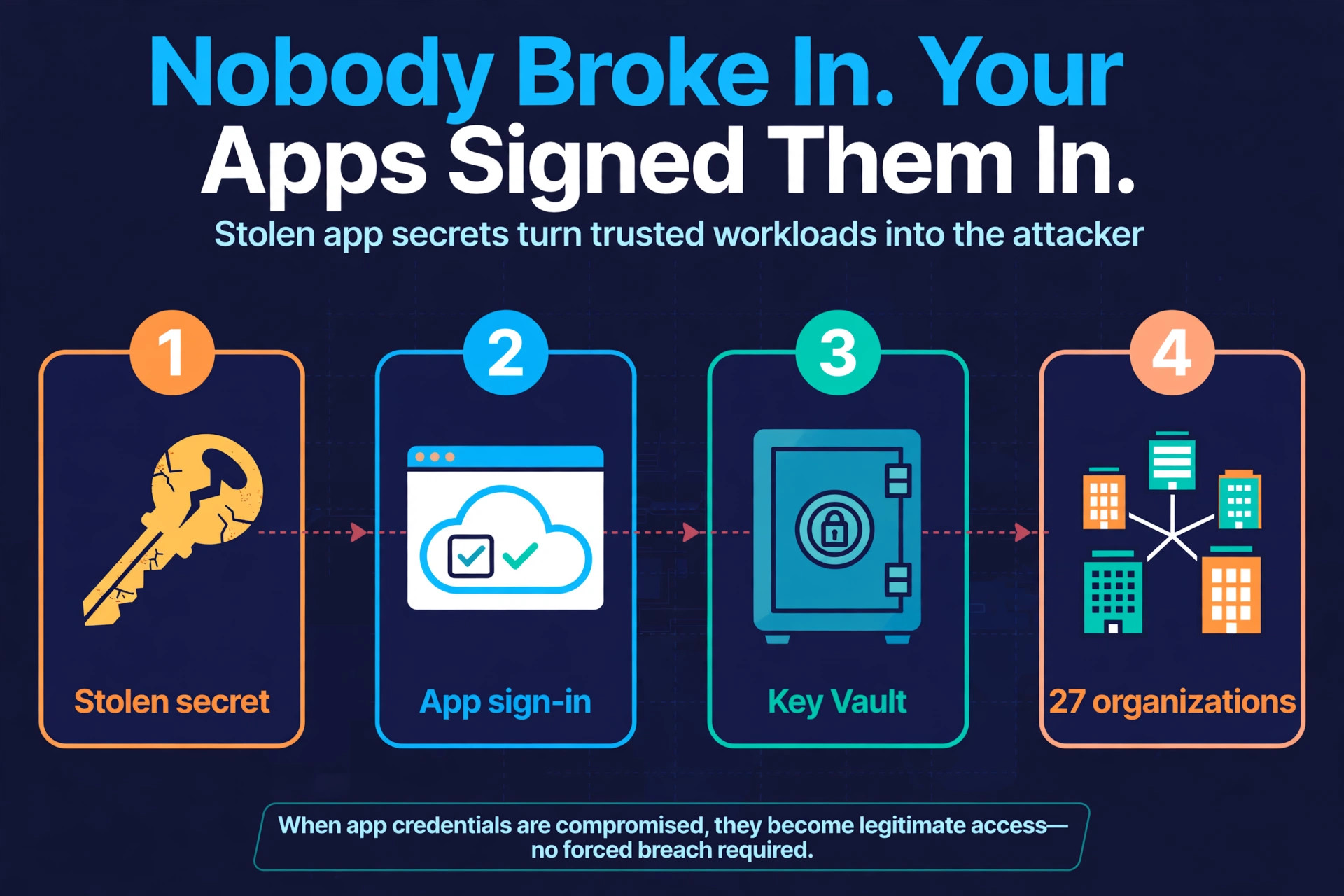
Then there is the method. The actor used offensive agentic techniques — autonomous tooling that scans for exposed secrets and acts on what it finds with minimal human involvement. Microsoft has described agents sweeping public GitHub repositories for credentials and AI API keys, then chaining them into follow-on attacks — in one case, from found secrets to data pulled out of Azure Key Vault in about five minutes. Chainalysis is not an outlier — Chainstack, OpenCode, Warp, and WorkOS have all disclosed AI-driven attacks in recent weeks. The pattern is consistent: the agent hunts credentials first, because credentials are what turn one foothold into the next five systems.
What to do now
- Treat a reused Chainalysis password as burned. You cannot reset it on Chainalysis yet — the company has said as much — but you can change it everywhere else you used it. Do that today, and make sure MFA is on for those accounts.
- Rotate keys and kill sessions. If you use Chainalysis API keys, plan the rotation the moment access returns, and revoke active sessions and tokens rather than waiting for them to expire. Live tokens were part of this exposure.
- Use the official path back in. Send your trusted IP addresses to Chainalysis support or your account team for the allowlist, and only follow reset instructions that arrive through channels you can verify — a breach full of names and usernames is a phishing kit waiting to be mailed.
- Audit your own secret sprawl. Agentic attackers are farming public repos and leaked configs for keys. Scan your repositories and CI pipelines for committed secrets, move keys into a vault, prefer short-lived tokens, and alert on key use from IP addresses you do not recognize.
The uncomfortable lesson is speed. A human intruder works a list; an agent works all of them at once, at machine pace, and credentials are its favorite loot because they never stop being useful. The organizations that come out ahead in this wave will not be the ones with the most passwords — they will be the ones with the fewest standing credentials to steal.